John Bikes

Poem by Ana Marcela Ramirez Cabal

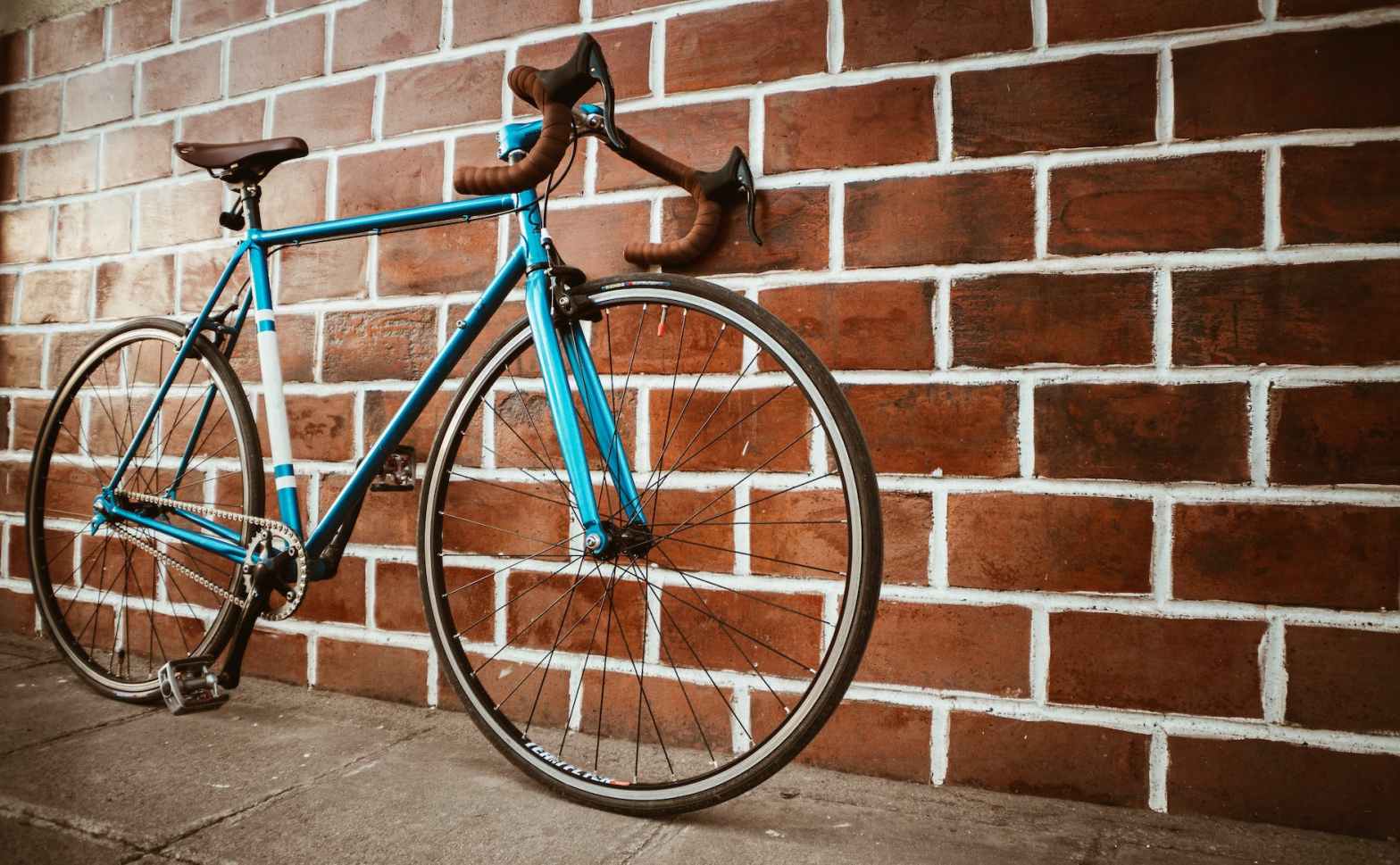
John bikes to work daily,
He pedals through daisies.
John, that’s what I named him,
The man, suit, and helmet.


John carries a small boy,
An older girl follows.
He never checks on her,
Alone, left to wallow.


City roads are danger,
They’ll bite you, they’ll burn you.
And trees, even stranger,
Can haunt you forever.


Yearns for a glance, briefly,
She’s falling behind.
John’s grasp tightens swiftly,
Alas, the wrong task.


At school he mistakes,
Her braids for the buses,
Her smile for the gateway,
Her voice for the masses.


Drop off, so easy,
When half doesn’t make it.
The girl fell, unnoticed,
Blissful unawareness.

To Mount Clarewa Part 2

Fiction by Rosie Etheridge

In the centre of Mount Clarewa stands a bronze statue of Cecil Clarewa standing on the very spot where he first struck oil in the 1870s. Cecil stands with his hands in his pockets, looking out on the town he built. His once gleaming moustache is faded and smoothed by the fervent hands throughout the years that have rubbed it for good luck. In the graveyard of the little white church he shares a tombstone with his wife of over fifty years and one of their unluckier children, Albert Clarewa. The oil town, which had flourished for the many years Cecil had been alive, experienced a sudden catastrophic decline after his death in the mid 1920s. A number of the residents had left for the enticement and work of the cities springing up in the west. Numbers dwindled almost until desertion until the building of the nearby road system unintentionally forced all western-bound traffic to pass through the ghostly town. 

There was one, frequently used road in Mount Clarewa (to call it a road was generous, it was more like a dirt track). The majority of buildings lined the one road. There was a post office run with perhaps the slowest service this side of the continent. It seemed that no matter when you got there, no matter the tiny population of the town, there would always be at least two people ahead of you in the queue. There would, without fail, at the front of the queue be some dreary chatter about stamp duties and the weather while the other customers impatiently tapped their feet. Opposite this was a triangular-roofed convenience store whose owner, Mr Grace, appeared to change the sign to ‘Closed’ whenever he sensed imminent customers. This led to much speculation in the area regarding the behaviour of Mr Grace and his store. If you did manage to make it within the store however, you were greeted by a perpetual smell of English mustard and a disproportionate number of buzzing, fluorescent low-hanging lights so that every shopping trip felt like an interrogation. Next to the post office was a quaint little cabin, barely larger than a hut. A finely painted red and gold sign declared it ‘Tabby’s Treasures’ and listed the extensive merchandise housed within including: postcards, books, general curiosities, bikes, jewellery, paints etc. It was run by Dr Tabbitha Westbrook (Tabby). Once a notorious figure in Lymphology, she realised her dream of owning a bookshop in Mount Clarewa and expanded from there. She was said to have read every book in the town at least twice and bore a striking resemblance to a crow. At 8:20 each morning she would climb her rickety wooden ladder to clean the sand from the Tabby’s Treasures sign. Upon stepping down she would wave across the track to Siergi, the owner and sole worker of the Clarewa Garage.


You’d be forgiven for thinking that the garage at Clarewa would be constantly teetering on the verge of bankruptcy for lack of customers. Despite the singular track dust road, Clarewa was a crucial point for those motoring in the West. It was the only gas station or settlement of any description for an almost troublesome distance. This meant not only were all motorists forced to stop for supplies, but there was a great number of cars that needed to be towed having underestimated the distance between stations. This was as beneficial for Sizzlin’ Cecil’s Diner and Motel as it was for the garage. There was a constant string of frustrated guests who were housed at the motel while they waited for their car to be fixed. On the few occasions when the garage had the part or solution needed, it could be only a few days’ wait. On most occasions the part had to be delivered from a dishearteningly big distance which led to delays of weeks. On one particular occasion Cerys Dan Lisa’s car had needed a part which nobody this side of America seemed to possess. After weeks of delays Cerys had decided instead on staying in Clarewa and was now one of the residents housed in a neat row of pale blue houses behind the main road. Cerys had then gone on to become the second teacher at the Clarewa school, home to students of all ages. She’d invested a great deal into the renovation of the grand wooden school building (which also served as the town hall).


Clarewa schoolhouse was a pale yellow building, the colour of hazily remembered summers. A pristine row of red and white potted flowers lined the front of the building up to the steps that led to the double brown wood doors. A pair of swallows roosted in rafters of the sloping roof and could be heard chittering throughout the lessons. In the months when they were building their nest, the occasional twig would fall down onto an unlucky student or the creaky floorboards. There was a singular expansive room which made up the classroom for all students. The two teachers split them into the category of younger or older owing to confused and unknown rules. The younger students faced the blackboard at the back of the classroom and were taught by Miss Dan Lisa, the epitome of a primary school teacher. It seemed she had a never ending supply of both patience and long, flowing floor length skirts. The older were taught by the more stern Mrs Grace, wife of the convenience store owner. Much more stern, Mrs Grace’s clothes were perpetually smudged with peculiar mustard-yellow stains. It was the great pleasure of the students to guess and find the locations of these stains each day. Mrs Grace had a special passion for history derived from the belief that she was directly descended from the founder of the town, Cecil Clarewa, although no proof of such was ever offered.


At 3:15 each day when the final school bell had been rung, Cerys packed her chalks, papers to mark and empty coffee flask and headed to Sizzlin’ Cecil’s. Sizzlin’ Cecil’s was a long wooden cabin with large windows all along the front allowing those driving past to see fully in. The floors were faded wooden floorboards and the walls a warm coffee brown littered with pictures from the history of Mount Clarewa. Cecil’s moustache firmly haunted the walls of the diner. Brown and yellow peeled leather booths lined the windows and a wooden bar with stools stretched the full length of the building. The little bell above the door jingled.


Cerys slunk into a stool at the bar.
“The usual?”
Maggie had worked at the diner since she was 17. Each morning she put on the same mustard-yellow uniform with the pinny, frilled skirt, slicked her brown remarkably shiny hair into a ponytail, stuck her pencil through it and marched off to the diner. At 8am she turned around the sign, a drawing of Cecil Clarewa smiling for open and frowning for closed.


“Yah, thanks. How’s it been today?”
Maggie poured the thick pink liquid into a slender milkshake glass and shrugged.

“So-so. The regulars and a coupla motorists.” She topped the strawberry shake with whipped cream, a cherry and a smile. “Anything else I can get ya?”
The bell rattled again and the door opened.

Tightly Spun

Poem by Ana Marcela Ramírez Cabal

Hubris, always tightly spun,
Soaring, gliding, comes undone.
Waxed wings dare to touch the sun,
Stretched forth arms with a handgun.

Injured the fragmented child,
Picked a bullet, burned your palms.
Allowed fierce tears to drip down,
Like a tempest, reconciled.

Now, pull on threads back blithely,
Weave good fortune anew.
Bled out all your winery,
Forsake, spill, leak the bitter brew.

Weeping your secrets to the wind,
Singing your sorrows to the trees,
Entanging lips intro a folly grin.

The Power in Writing

Why do we write? Writing has the potential of catharsis and empowerment. When we write, we give a piece of ourselves and our imaginations, to the world. It can bring change, inspiration, and hope to the world. As writers, we hold immense power in our pens or, more often, keys.

We’ll discuss how to improve writing skills, share important quotes from authors, and look at an interview with our EIC and founder, Alyssa Sykes. 

Four powerful quotes from four powerful, female writers: 

Toni Morrison

“The ability of writers to imagine what is not the self, to familiarize the strange and mystify the familiar, is the test of their power.” 

Margaret Atwood

“A word after a word after a word is power.”

Emily Dickinson

“I know nothing in the world that has as much power as a word. Sometimes I write one, and look at it, until it shines.” 

Rivers Solomon

“I write to please my readers. I write to entertain them and move them. I hope that at least on an individual scale, my work can be a balm to those suffering, as many works of writing have been to me. I hope that it might make one person survive that much longer by finding a kindred. So I suppose that is a kind of resistance. Our survival.”

Here at SeaGlass:

One of our staff writers encapsulates how transformative writing can be in this lovely piece from Isla Mccullough! 

Here’s an excerpt:

“Writers are the Greatest Devils”

‘I chose to be a villain. I chose to transform myself into someone who will make their characters suffer in order to create the best narrative. I chose to be the puppeteer. I chose to be one of the greatest devils of all.’

What kind of power does writing give you? What do you hope to accomplish with that power?

Next, we’ll dive into some writing advice. Here are three pieces of writing advice that can give you the confidence and power you need to  help improve your writing.

“Read. Read about the craft, and the business of writing. Read the kind of work you’d like to write. Read good literature and bad, fiction and fact. Read every day and learn from what you read.” —Octavia E. Butler

Breakdown: Reading is just as important as writing is to your process. You can not only discover new writing styles and different plot devices but you can also weed out styles, structures, and other writing choices. Ones that wouldn’t work in your piece. There’s always something to learn when reading.

“The best advice I ever got was to ‘choose the important over the urgent.’ The gist of this wisdom is that nearly all things that seem urgent now are in fact not terribly important…I have tried very hard to focus on things that matter most to me — craft and themes — rather than focusing on the things that seem pressing at the time. There’s an awful lot of noise and static, and it takes painful effort to listen for things that have timeless value.” —Min Jin Lee

Breakdown: Find something you’re passionate about in order to “focus on things that matter most.” If you’re passionate about what you’re working on,  it makes the writing process smoother and shows in the end results. Trends come and go but fostering your own interests lasts longer. 

“I keep lists of ideas and when enough of them seem to be speaking to each other, I put them in the same document and try to connect them. Or I’ll start with an image I can’t get out of my head, and try and make sense of it on the page. There’s a real pleasure to being surprised by my own characters or plots, which is really just a way of saying there’s a pleasure to being surprised by my own subconscious.” —Carmen Maria Machado

Breakdown: Keep a list of ideas in a notepad or a notes app. Have this on you at all times to keep them all in one place. Once they are written down, you can connect them to see different themes and plots in new ways. Being able to see your ideas come together in new and exciting ways can give you, the writer, a different or better path.

Interview:

Thanks to our EIC and founder, Alyssa Sykes for rounding out our ‘The Power in Writing’ post with an interview all about her writing habits, processes, and inspirations!

What’s your favorite aspect of writing? 

I love character creation!! If I could do that without a plot I’d have a thousand books. 

Do you write for yourself or others? 

A bit of both, it’s a way to convey my emotions, thoughts, and views for other people to see. I also like trying to evoke certain reactions from people. 

What does your writing process look like? 

Long story short, type A gone wrong. I start with an idea and I try to write a few sentences about the general story premise. Then I build characters, the world, and make a very organized outline. However, when I’m writing shorter pieces I tend to just have an idea and sit and write, very much winging it. 

What inspires you? Motivates you?

People inspire me. Everyone is unique and different and have something special to bring to the world. People write the books that interest me. People create movies. People make cultures. People are fascinating. My main motivator is just to accomplish my goals; I like being successful.

How do you improve your writing?

I read a lot, not just books but also advice and educational stuff. Also practicing, trying new things and seeing what works for me. 

What book or books have you read over and over again the most? 

The Heroes of Olympus series by Rick Riordan. I’ve lost count of how many times I’ve read it. Also When the Butterflies Came (by Kimberley Griffiths Little), that’s a solid book. 

Does writing give you power or do you give your writing power?

I’d say writing gives me power because there’s a whole world at my fingertips and I can do whatever I want with it. It’s also so powerful to see people read your work and see the emotions you have elicited through your writing.

In Conclusion

We hope this breakdown into different authors’ advice and words helps your own writing. It’s courageous to take up a pen and write. It shows compassion, determination, and hard-work. There’s a world at your fingertips and it’s up to you to show your world to others. At SeaGlass we strive to promote your worlds, to uplift, and help you find the power in yourself and your writing.

Rejection Therapy

Nonfiction by Anam Tariq

Rejections are of various natures — your admission application to a university is rejected, your opinion is rejected, your proposal is rejected, you are rejected and sometimes your submission to a literary magazine is rejected. Oh it hurts! I know. The first kind of rejection above was the one that hurt me the most. Still hurts. But the more important thing is how you overcome that pang of rejection, that stab which pierces right through your heart, metaphorically. Getting over it is the big achievement which should in fact be celebrated. So, how do you get over rejection? If you have successfully dealt with rejections in your life, then congratulations to you! It is an art which needs wisdom and patience. I will list here a few things that I do to get over rejections from literary magazines, which
you could as well see as ways to circumvent rejections in general:

  1. I remind myself that one rejection is not so big of a deal. Afterall I possess so many other things, achievements, endowments in life for which I should be grateful.
  2. I try to be patient and wait for good times ahead, acceptance from other magazines, etc., since after difficult times there is ease.
  3. Once I receive a rejection, I take my revenge by submitting to more lit. mags.
  4. To lighten up my mood after such bad news, I watch some series or movie.
  5. Rejections don’t determine the quality of my poetry or prose, so I need not worry about them. My work which is just a rock for one magazine may be a gem for another. I know my art has potential, it has been loved by so many kind readers and that is enough for me.
  6. Also, if I keep on working on my art I can improve it and become a better writer. I try not to get disheartened or give up writing even after getting rejected by several well known mags.
  7. I try to submit work to those magazines that are eliciting submissions based on a particular theme. There we have more chances of acceptance.
  8. Before submitting to lit. mags. I sometimes read the kind of poetry they have already published and see if their taste matches mine. It gives me an idea as to whether they will like my style of writing.
  9. ‘Keep on submitting’ — that is my motto.
  10. If it’s any comfort, you can check out this Rejection Competition by Reneé Bibby which may be some fun. I have tried it.
    I hope I helped you lessen your agony!

The Undisciplined Poet: An Interview with Moira Walsh

An interview by Anam Tariq

1. Tell us a bit about yourself.
Hi, Anam. Thanks for your patience in finding a time to connect. I was born in Michigan, near
the Motor City (Detroit). Now I live in the metro area that’s home to Mercedes-Benz, Porsche,
and Maybach. The funny thing is, I’ve never even owned a car. I don’t drive. As for writing, I
guess I’ve always been a writer in some way. I feel most comfortable expressing myself in
writing. I don’t keep a journal, but I do write ‘decentralized’ observations, reflections, and
stories: on postcards, in the occasional letter, and in poems.

2. Can you tell us more about your poetry collection Earthrise? What themes have you explored in it?
I want you to read it, then tell me [laughs]. A few months ago, a dear friend wanted to know
what Earthrise is about, and my response was: “I hate that question, but since you asked: It’s
about living well with depression.” She and I both have experience with the illness. So my
answer was for her, specifically. There are as many themes in my book as you can find. Each reader completes each poem in their own way, bringing their whole inner life – their yearnings, aspirations and associations – to the lines on the page. That’s why I dislike talking about the book. I want readers to make their own discoveries. Then we can sit together and talk about the form, the language, and what it evokes in us.

Hint: Readers could examine the cover and the title, and the order of the poems, the poem titles, the formal elements. Ideally, they will find themselves writing their own poems [laughs].
Seriously, that would be the biggest compliment. The biggest joy. Real success!

3. Can you tell us about your writing rituals?

I write sporadically. But when I write, I write a lot. It just pours out of me. This summer I
returned to Michigan for the first time in six years and visited a writer I admire. I hadn’t seen
him for ages, and the last time we met, I was not yet calling myself a poet. It was a huge relief to
hear that he also has no rhythm or ritual. We now call ourselves The Undisciplined Poets
[laughs].

4. What are the best and hardest parts of writing?
The best part is simply writing a lot, freely, without any expectations or deadlines, when I feel the need to write. And the hardest part is feeling the urge to write poetry but being too tired from
my day job, or too distracted by media.

5. What are the things that spur your imagination?
The small and large existential questions. Light through leaves, water in every form, being in
love. Wanting to get to the root of a difficult situation. Plants, insects, music, food. Anatomy. Autonomy. All that good stuff.

6. What was the process of getting your book published? Was it a challenge?
Working with Penteract Press was fun, freeing, respectful, and satisfying! The previous years were a different story. From 2020 to 2022, I garnered a total of 128 rejections for a bunch of different poetry manuscripts. Zero acceptances.
I made Earthrise in 2022, specifically for Penteract’s open reading period, and I only submitted it twice (to them, and to the lovely Osmosis Press). By the way, Penteract Press no longer accepts unsolicited manuscripts, but please do follow and support them. I’m also a guest on the
Penteract Podcast: Series 3, Episode 2. Check that out, too!

6. In your opinion as a poet, what is more important — to get your book of poems out or to get published in more and more lit. mags.?
Do you want my earnest answer? The most important part is whatever brings you joy. For most writers, that’s writing. Writing – not necessarily publishing! But if you want to engage with any part of the publication world, you’ll need to find a way to enjoy the push-pull of failing and trying again. And again. And again. Finally, if you stay persistent, you will start to fail better (to
paraphrase Beckett). Maybe you’ll make a sport of it, using the gut-punch of rejection to bounce back and move towards your goal, whatever that may be.

7. Would you like to give some tips to aspiring poets and writers?
If you are looking for validation, adoration, fame, ask yourself why. In my experience, “getting published” may scratch that itch, but it certainly won’t heal it.
If you want to feel less lonely, find your people, your community. Start today. Read lots of different authors, cast your net wide. When you find the writers that grab you, dive deep. Research their lives and contemporaries. Don’t forget, you can reach out to living authors directly. Tell them what you enjoyed, what you discovered. Offer to interview them. Make sure your library carries their books. Write thoughtful reviews and submit them to lit mags. Your circle will grow and you’ll connect with a larger world of beauty-seekers, truth-tellers, art-
makers. Finally, take your time. Getting published (or deciding to publish your own work) takes energy
and courage. It is a threshold moment in which you declare, “I have something to say, and I want to share it with you.”

Bio
Moira Walsh, originally from Michigan, makes her home in southern Germany. She is the author of two poetry chapbooks: Earthrise (Penteract Press, 2023) and, with Wilfried Schubert, Do Try This at Home (Femme Salvé Books, 2024). Moira’s poems can be found in Bennington Review, Hanging Loose, Poetry Northwest, and Stone Circle Review. A founding member of Kollektief Dellgart, she has co-translated work by contemporary poets Olja Alvir, Ken Mikolowski, Mariia
Mykytsei, Halyna Petrosaniak, and Maë Schwinghammer.

Social Media & Web
Instagram: poetbynecessity
Twitter: poetbynecessity
Buy Earthrise: https://penteractpress.com/store/earthrise-moira-walsh

World, meet girl

Poem by Ana Marcela Ramirez Cabal

First breath drawn in your embrace,
Cradled by life’s joyful greeting.
Since, she’s presenced no such grace,
Sowed seeds in your first meeting.

Deep as life, her trembling steps
Found wisdom rooted in the earth.
The scheme of nature with its webs,
Proved to girl she needed stealth.

Unburdened laughter of a flower,
Constellated spirits gleam much brighter.
Girl is glossed and polished, cursing power.
She sprouted protests: grander, louder.

To Mount Clarewa

Fiction by Rosie Etheridge

Mount Clarewa was founded in 1872 by the intrepid Cecil Clarewa, a man of infamous character and an even more infamous moustache. It was said the thing was his good luck charm and that in difficult times he even spoke to it. Twice daily he coated the bushy beast in a special beeswax he had shipped from far overseas. In fact, when he arrived in Mount Clarewa he had only a few scant tools and an extraordinary amount of beeswax to speak of. Cecil, like many young men at the time, had set out to make his fortune extracting oil from the desert that surrounded the mountains of the West. Through extraordinary and perhaps suspiciously good luck, Cecil struck oil in a matter of months. 

Mount Clarewa stood a few miles from rocky, sand covered mountains where only cacti and lizards survived. It was the only man made structure for tens of miles except from the railroad that chugged along in the distance beyond the swarming mountains. The closest stop, at the outpost of Gerrotsville, was practically a hut which on many occasions trains passed without notice. This was especially common on gloomy desert nights when the precise location of the stop was almost impossible to decipher. The few who used the spot recounted being dropped off a number of miles away after the conductor had suddenly remembered its existence. Gerrotsville consisted of a few scattered wooden buildings including a church, single shop and a number of homesteads. The trains travelled on into the largest town this side of the desert, Limeton. On Mondays Cecil rode his great bay horse Lincoln to the train stop at Gerrotsville and caught the train into Limeton. 

It almost always took exactly 35 minutes for the train to make its way to Limeton. On occasions when a herd of buffalo lazily stumbled across the tracks it could take hours. You simply had to wait for them to move on while the dust they churned up filtered in from the open windows. On these occasions there were a number of unfamiliar passengers who descended into a wild hysteria at the belief the train had been stopped by “outlaws”. Cecil usually dozed on these occasions, the panicked voices muffled by the walls of the compartment, with a stained paperback over his eyes. The blazing midwestern sun left the outline of it tattooed upon his face. 

Mollie Sable worked at Western Brothers bank in Limeton. She had pin-straight dark hair that she took twenty minutes brushing each night before bed. Each morning on her walk to work, she bought Dr Amel, the owner of the Opticians over the road, whatever sweet or savoury creation she had baked that week. Her cheese scones were the doctors’ particular delight. Mollie cherished Mondays. Each week she waited for the slumbering sun to awake her on those precious mornings. At exactly 9:15, the lithe figure of Cecil Clarewa would appear against the grand double doors of the bank. He would remove his black hat and look around. Mollie had noticed the light that dawned on his face when his eyes fell upon her.  

“Mr Clarewa, fine morning.” 

“Indeed. The weather always seems to be fine on Mondays.” Mollie looked down and smiled secretly. “Depositing again today, please.” 

“Another one? Why, someone is doing well.” 

He handed over the notes he had received just fifteen minutes earlier. “Business is good.” 

“And what exactly is your business, sir?” Mollie counted the notes. 

“Ah- well that would be oil, I suppose.” 

She raised an eyebrow, “You mean you don’t know?” 

“I dug it myself. Found it in an area near those mountains over there. The ones shaped like a sleeping dog. There-” He pointed out the windows and she squinted to follow his finger. 

“You have your own town?”

“Built it. Just need a few fellows for company now. Monday morning I get the train in, trade my oil, deposit my money and buy whatever it is I need. It’s amazing what they’ll let you take on a train.” 

She had lost count. “Is it far?” 

“On the train?” 

“Yes.” 

“No, no it’s not.” 

That Monday morning at exactly 9:30 Mollie Sable crossed the street to Mr Amel’s Opticians to say goodbye. Through the window of the glasses shop, you may have just been able to make out a tall figure in the background leant against the wall. There was a glistening to her eyes and a metal lunchbox in her hand when she came out. The only other place they stopped before the station was her insubstantial house on the edge of the city. As Mollie stuffed her few clothes and belongings into a case, Cecil talked of the Clarewa he wanted to build. The little white church, a sky-blue school and as many houses as there were in Limeton. 

Sudando

Poem by Ana Marcela Ramirez Cabal

A sticky sheath lays on my body,
All inches covered, isn’t it romantic?
Shadows fall short, I’ve become a residence,
For assertive guests so incandescent.

They drip and glow and stain and flow;
I don the wet as pines with snow.
Most claim this mist is punishment,
But flesh, adorned, is no ailment.

With every drop I feel release,
All stress and heat is turned to grease.

Rust – Part One

Story by Rosie Etheridge

They were watching her, eyes glassy with death. Writhing, she held one still in her bloodied hands and slipped the knife from top to bottom. Into the belly. Her hands scooped out the warm insides, pulling them out onto the table. Each fish took her only a matter of seconds. In those seconds they went from the furtive brink of life, to being tossed onto a mass grave. When she reached the end of the crate she stopped, hands on hips, surveying her work.


The door to the wooden hut slammed open. Her uncle, laden with crates, stumbled into the room.


“Last of the day.” He dropped the crates down in front of her. The clock mounted on the wall, shaped like a whale, showed just past three.


“Slow again?”


“Slow again.” His rough hands began rolling a cigarette.


The first fish she took up was still mostly alive. Its body flailed around in the guts on the table like a pig in mud. They only stopped twitching when she tore out the heart.


He used a match to light up and exhaled exultingly. “Might pick up in Spring.”


“Could do.” She was already halfway through the first crate.


“Will have to.” He held the cigarette out to her. She eyed it; shook her head. He raised a brow.


“School starts again soon-”


“Lila-”


“I can gut in the evenings.” She stopped her work now and held his gaze.
Her uncle Steve was the tallest in the town. Most nights he could be found staring silently into the bottom of his glass at The Gull, the only pub that survived. On Fridays he usually drank more pints than he said total words. Lila knew he brushed his teeth before he got home most nights. She could see through the excuses he told her and her father like they were tissue paper against the sun. She also knew that come the month of her birthday he would drink only halfs so he could hand her something shoddily-lovingly wrapped on that June morning.

“I can’t take you. We need the van.”

“I can cycle.”


“With those books?”


“Please.” Putting the knife down, she stepped closer. There was a moment in which the only sound was the flapping of the suffocating fish against the wooden floor, beating their own deathly tune. “Please, you know I can do it.”


“I don’t doubt it.” He smiled like someone who had forgotten how, put his feet up on the desk covered in papers. “You know, it’s not me you have to convince.”
Sighing, she returned to the fish. “My dad-”


“Your dad is a good man. Just-” He paused, tapped his fingers on his teeth in the way he did when he was searching for words. “He thinks you’ll never come back.”


“Like my mum.”


“He’s just scared.”


“Me too.”


Steve stood, lifted the crates of dried dead, gutless fish with a familiar ease. At the door he lingered a moment, his eyes fixed on a girl just like her mother. Then he was stooping out of the door, loading the van and driving away. By the time Lila looked up he was a dusty red dot in the distance. She pierced the hooks through their flesh. They hung in the smoking room with their heads down. The windowless room, caked with layers of grime from years of smoking fish, housed row upon row. When Lila was done with her work, she removed the blood-laden apron that reminded her of the school production of Sweeney Todd. She washed her hands, scrubbed them with a delicate brutality. Under the nails. In between the fingers. Woven into the cracks on her palms. The blood seemed to have a remarkable ability for drying just about everywhere. The stench was something she usually was numb to but today it was cloying, nauseating.


The walk back to their house was arduous. This was a town that barely sputtered with life. Once, when fishing had been a thriving business, the town was too. Now almost every boat sat rusted upon the banks, their carcasses serving only as a playground for bored children. The boards along the walk were rotted, palled in algae. Peeled paint from boarded shut buildings fell, snowflakes, upon the pavement of the one main street. Lila passed The Gull. The sign squeaked against the wind, heard just above the sound of the gulls squawking above. Even the pub’s windows were hazy, mismatching. The name above the door read ‘The Ull’, the ‘g’ lost also to time’s decay. The carpets were sticky, thick with smoke, a faded, unrecognizable paisley red. The chairs and tables were held together with replacement boards or tape. Distant, ancient soft rock trickled out from a smashed jukebox in the corner. The pub was usually quiet enough for all to discern that the jukebox was only able to play the same song over and over.
Lila walked along the seafront, kicking stones down onto the shore. Most Fridays she would go to The Gull on her way back, meet the few loose friends she had and drink until the edges blurred slightly. Not today. Their house was set back from the main road. It was once white but now was a faded, sickly grey the same as the skies above always seemed to be. The garden was a mangled mess of weeds and dead branches from an old blackberry bush. On the flaking red front door was a muted sticker that proclaimed ‘NO trespassers NO cold callers NO time wasters’. Lila slipped off her shoes.


“Da- I’m home.” She shouted up the stairs. The decor hadn’t been updated since the 70s when Lila’s grandparents had lived there. Throughout the brothers’ lives and Lila’s, the house had remained suspended in time. There was a great number of chunky stone fireplaces throughout the house all covered with her grandmother’s various ornaments. There were no pictures aside from one of Lila’s grandparents on their wedding day.


“DA-,” she called again.


“I hear you. I hear you. Good work.” Her father appeared in the doorway of the kitchen holding a whisk. She raised a brow.


“Omelets.”
“Ah.”
Lila’s father was the human embodiment of a chunky sweater. However, she tried, she could never quite imagine him hauling giant catches on board, extinguishing the life from a creature, even though she’d seen him do just that. He was a half a foot shorter than his brother, his hands just as scarred and his nails bitten all the way down. She followed him into the kitchen.


“You want to go back to school.”


She hadn’t even finished pouring her orange juice. “I do.” She took a sip and winced.
He tipped the eggs into the pan.


“You should.”


“What?”


“You should. You’re smart. Smarter than fish.”


He turned to her. His gaze made her feel like stained glass. She felt he knew then. Knew exactly what she was hiding. Knew what was already growing, already forming inside her and in just months would surely tear them apart. She had the overwhelming sense she was sinking.