Love in the Apocolypse

Fiction by Lauren Purnell

Jonah bit into an apple. It was mushy, sweet, almost rotten. But he hadn’t had fruit in months, and Jonah would never pass up such an opportunity. And besides, Jonah deserved it after what happened last year. The secrets. The gunshots. The blood of his lover staining his hands. 

In the first month of The Plague, a group of former office workers from Queens took him in. They showed him how to shoot a rifle, ride a horse, and start a fire. And he needed that, being a sheltered graduate student at a university in the wealthy part of Manhattan. Jonah was tasked with finding food for the group, along with a man called Michael, who was an inch shorter than him and smelled like warm spices and smoke. They spent their nights talking by the fire, cuddled up to each other. It was easy, those days. Sure, the world was collapsing, but at least he had someone’s shoulder to rest on. 

Now, he couldn’t afford to rest his eyes. Not even for a moment. 

The only tech that worked was the kind before the age of the Internet. Jonah listened to his music on a portable cassette player. While he did his scouting from the Plateau, 90s hip hop and R&B records played softly in his ears. It was what his mother listened to, back when Jonah was young. On Fridays, the gangs collected their dues with violence and intimidation. It was best to lay low. Jonah had lost his group, and he was a rogue now—life for rogues in this city was tough. 

Right now, the horizon was clear. Jonah exhaled. He pulled at a curl, twirling it between his fingers. His hair needed a trim. He grabbed the shears from his utility pouch and got to work, finding the split ends by touch. 

Then, rustling from behind him. He dropped the shears, resting his hand on the gun’s grip. No one else knew about the Plateau but Michael. And he was dead. 

Whoever found Jonah and the Plateau was a clever fellow. But also, a severe threat to Jonah’s life. 

Jonah quieted his breathing, to make sure he was undetectable. More, louder rustling came from the bushes, and Jonah saw the heel of an olive green boot. Camouflage. This was no newcomer to these parts. 

He spun to face the bushes, keeping an eye on the rest of his surroundings. Jonah released the safety on his pistol. He sucked in a breath. 

When the other human finally revealed themself, Jonah positioned his gun right at their head, finger ready on the trigger. “Stop right there.” 

The person, still holding their rifle, held their hands up. “I mean no harm.” A warm, deep voice. A few shades lighter than Jonah, dark brown hair sticking to his face with sweat. Muscular. Without weapons, he could take down Jonah easily. 

“Drop the rifle and I’ll believe you.” Jonah did not waver; his voice did not shake. 

He placed the rifle on the ground, like parent putting their child to sleep. Then his hands went up above his head. 

Jonah lowered his pistol, shifting away from the man in front of him, for just a moment. Out of the corner of his eye, He swore he saw him pull out another long range weapon. On instinct, Jonah pulled the trigger. 

The man [name: Jesus. metaphor for a savior????] yelped. When Jonah took a closer look, the man didn’t have a weapon at all. He’d just shot someone unarmed. Jonah cursed under his breath, then walked to go help him. The bullet pierced his leg. Blood gushed from the wound. 

Well, now Jonah felt bad. He yanked his medical emergency kit from his pack, and approached the man. “I’m sorry. I thought you had a gun.” 

He smiled—why would he smile after being shot by a stranger?—and said, “I understand. I’ve made that mistake before.”

Jonah didn’t know what to say. He figured the man would attack, and Jonah would have to flee across the city again, watching his back at every moment. Instead, Jonah was about to fix his bullet wound. 

He stumbled over to the man, who was now slumped against a tree, panting. Jonah learned how to take care of injuries only a month ago. The steady gush of red liquid still freaked him out, and being near to another person—especially a stranger—made his heart pound. 

Jonah did exactly what his former crew taught him, and what he’d read in the old medical manuals. 

“You must come here often,” the man said. “You guard this place like it’s your palace.” 

Jonah grunted in response, yanking out the last piece of bullet shrapnel he could find. The man winced. Jonah could feel the man’s eyes on him, curious and waiting. 

“What?” asked Jonah. 

The man’s lips quirked up. “You haven’t told me your name.” 

He debated lying, giving the man a false identity to protect himself. Instead, he said, “Jonah.” 

The man didn’t wait for Jonah to ask before responding. “My name is Jesús.” 

“Nice to meet you,” muttered Jonah, because he didn’t know what else to say. He rinsed off the wound, wrapping the largest bandage he could find around Jesús’s thick, muscular legs. 

Something about his presence drew him in. He wanted to talk to him, ask questions. Jesús seemed like the listening type. Someone who wouldn’t shy away from the mess that Jonah was, in the aftermath of last year’s incident. 

Jonah stood and wiped his hands on his pants. “I’ll help you down from here.” 

Jesús laughed. “Can’t I rest for the night?” 

Jonah blinked. He hadn’t considered that. “Oh. Sure.” Hesitantly, he sat back down, avoiding Jesús’s eyes and staring at the setting sun. It was purple and pink, like wild berries. “Where are you from?” 

“Born and raised in the Bronx, but I moved to Massachusetts for work. Then my mother became ill, and I moved back to take care of her.” 

Jonah nodded. It was dark now, and he turned to face Jesús. “Is that your real name?” He knew some people who changed their names after The Plague. 

“You’re looking for a reason to distrust me,” said Jesús. Was he in Jonah’s head? 

Jonah pulled at a loose thread in his jeans. “I just don’t know you, that’s all.” 

“If it helps,” said Jesús, adjusting his sitting position, “I don’t have a group.” 

It did help. He was a rogue, like Jonah. No alliances, no affiliations, no shield from a cold, loveless city. For a moment, hope swelled in Jonah’s chest.

Jonah swallowed hard. “Would you like something to eat?” 

Jesús’s warmth came nearer. Grass tickled Jonah’s ankle as he reached into his pack for the deer jerky he’d stolen from a stand at the market. Wordlessly, he offered it to Jesús. While he chewed, Jonah got to work on trimming his hair. He glanced over at Jesús every five minutes, just to make sure he hadn’t stolen any of his belongings. 

At around midnight, he found Jesús, leaning against his pack and snoring softly. Jonah felt a strange urge to drape his winter jacket over the sleeping man. He pushed it down. 

Jonah used to feel the same about Michael. They would lay awake after the rest of the group dozed off, and then they would sneak away to the Plateau. Michael would shower him with kisses some nights, and others he would sob on his shoulder. On the best days, he did both. 

A member of their crew must’ve feared the worst, because she followed them to the Plateau one night. He and Michael were so lovestruck that they didn’t hear the soft crunching of leaves behind them. They didn’t hear Alycia cock her gun. 

Alycia, like the rest of the office workers, never got past their hatred for gay people. Jonah and Michael knew that. They took the risk to love each other anyway. 

As Jonah grabbed his gun, three bullets tore through Michael. Heart, leg, head. Alycia was smart enough to run. 

And then it was just him and Michael, whose blood seeped through Jonah’s clothes and stained his hands. Even after his last breath, Jonah couldn’t move for hours. His wails were heard across New York City. 

Eventually, Jonah settled down next to Jesús. Despite the fact that a stranger lay next to him, Jonah succumbed to sleep almost instantly. 

###

Jesús was gone the next morning. Bleary-eyed and yawning, Jonah reached for his pack. He dug through each pocket individually. Nothing was out place. Jonah exhaled. 

It was fine. Jesús was a stranger anyway. He should’ve feel glee now that he didn’t have to gauge another man’s trustworthiness, just to be let down. Instead, Jonah missed the company. 

Jonah shrugged his backpack on and ventured back toward the city. 

Then, a familiar rustling of leaves. Olive green boots smeared with dirt. Jonah rested his palm on his gun’s hilt, but he knew it wasn’t necessary. 

Jesús emerged, panting, sweat glistening on his forehead. “I found us some breakfast.” He walked past Jonah and sat, opening the small brown bag. Inside were two pieces of smoked duck and four pieces of hardtack. 

“We’re not a team,” Jonah blurted. 

“I know,” said Jesús, with a soft smile. “I was getting breakfast for myself, and I figured I’d bring some for you.” 

Jonah didn’t know what to say. So he grumbled, grabbed his share of breakfast, and ate. 

Jesús tapped his foot, humming a melody familiar to Jonah. He couldn’t recall where he heard it first. Maybe his mother, who sang him to sleep every night. Maybe from church, which he attended every Sunday with his grandmother. Or maybe something from the radio, from a simpler time before New York fell to chaos. 

Jonah hummed along, letting himself share this forgotten part of his past with Jesús—even if it only lasted until sunset. It was worth it. 

The Stories We Used to Tell

Poem by Jacob Jing

Remember when there was a sad story
for every boy who got lost in the woods. When we cried
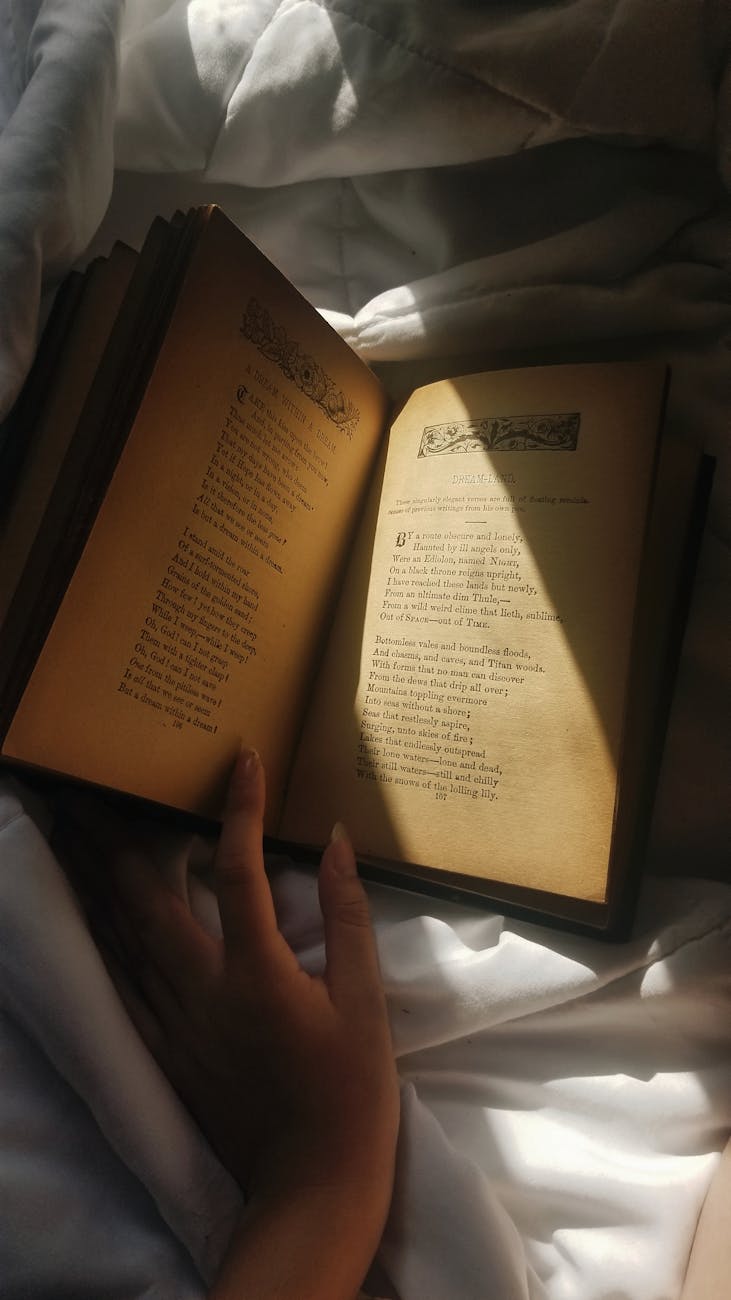
until there was a book laid open in front of us, smelling
of salt. Once, I could tell you the names of every child
without a mother. A stone passing from the belly into
the throat. How we only realize the weight
after it has left us. I keep carrying
so much more than myself. An invisible sadness. The way
living becomes more bearable
when we imagine it in diagrams. Exposition, we
are born with our mouths open. Conflict, someone
leaves us to die. Rising action, our stomachs
swell with stone. Climax, our lips are sutured
shut. Falling action—
Strange, how such weight translates to
such emptiness. Somewhere in between, we forgot
our own names. Our hands
collecting the tears before they can strike the ground.
We have nothing left except for these
wet palms. How they open and
close, releasing nothing but silence. How they mimic
the stories we used to tell.
How they are the last kind thing we have.

Pine Blossoms

Poem by Hailey Jiang

O, how we ran like the stars

That one lonely summer night.

And on my knee still is the scar

And in my chest, the light.

Your hand brushed past by me

And for a second I swore you were mine.

But your hand reached for the tree

The ancient infinity, formidable pine.

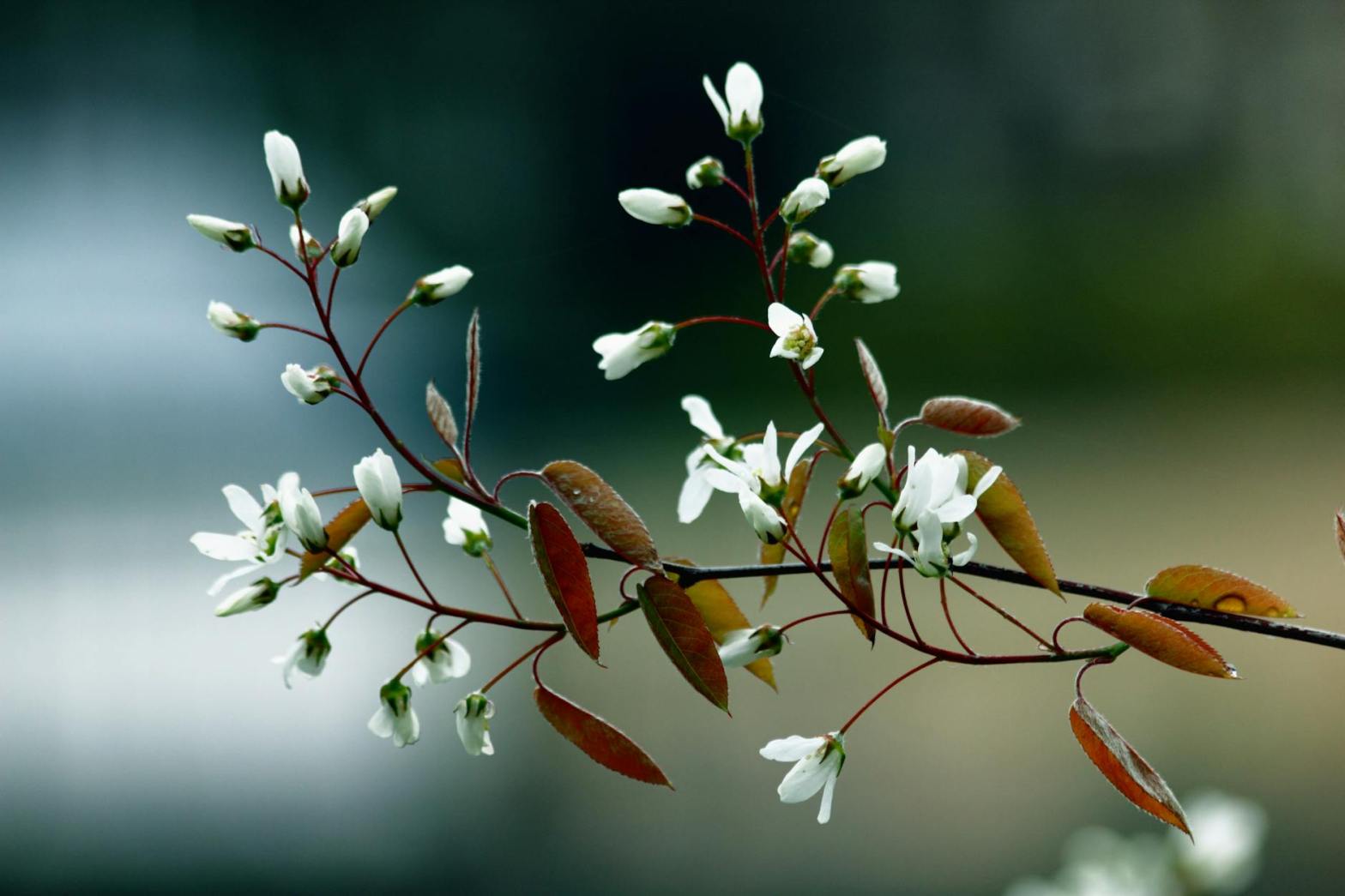
Darling, find me in the blossoms,

darling, find me in the leaves.

Do not look past the blossoms,

do not look for the grieves.

I shall never again look up at the sky,

Nor shall my legs be sore 

From running, chasing forever shy

Of being yours.

Alone in the dead wilted moor

I am not entirely sure

Of who I am looking for.

Shall I ever see you once more?

Born from the land’s cradle: books on women, community, and the global climate crisis


A review collection from Zo Navarro

A climate crisis is becoming more apparent as the year goes on. Multiple reports worldwide
showcase increasing heat temperatures, rising water levels for our seas and oceans, or melting
ice caps and glaciers at the North and South regions of the Earth. Carbon emissions, pollution,
smog, less green spaces, endangerment of flora and fauna species are also some of the other
effects of abusing natural resources. As reported by the United Nations Chronicle (2007), these
concerns were raised as early as the 1940s during the Industrial Revolution. In 1988, it was
observed that global warming demanded more attention and resolution as its effects became
more prominent in society.


Grassroots and administrative efforts, local or international, have since been made to minimize,
and therefore eventually resolve, the environmental crisis. It bears to make individuals think to
care for their surroundings more, to be mindful of their actions and consumption, and that
Earth’s resources, despite being vast, are not limitless. Resolving the climate crisis requires joint
effort and inspires community among people. It also centers women as the protagonist inspired
to take charge of changing their lives and of others.


Here are three books about community, the environment, and women who voice their
advocacies.

1. “All Over Creation,” by Ruth Ozeki


A story of environmental activism centers on aging farmers and their community visited by their
estranged daughter, Yumi Fuller, who has to fulfill her parents’ business. Fuller, with a different
life, work, and family since she ran away in her teens, now must understand the sentiments of
her parents regarding their farm, and how it connects to a controversy about genetically
modified food. Told through interchanging characters, events and viewpoints, it nurtures readers
the way crops are planted: with patience and trust.

    2. “When the Hibiscus Falls,” by M. Evelina Galang


    A collection connected through various narrators, their generations past and present, and the
    echoes of their family ties, it confronts an ever-changing picture of blood relations and their
    history, extending beyond that from ancestral houses, summer vacations in provinces, and an
    intimate exploration of Filipino culture and the diaspora. The daughters, mothers, aunts, grandmothers and cousins come to a unison about their hurricanes and typhoons, their roots, and the trauma that shaped its growth, and leaving lessons for future generations to bear fruit and be blessed with.

    3. “Olga Dies Dreaming” by Xochitl Gonzalez


    A story of gentrified neighborhoods, marginalized identities, the weight of family versus the fight
    for a greater environmental and community cause. These are seen through the eyes of Olga
    Acevedo, an in-demand wedding planner, and her politician brother, Prieto Acevedo. As a
    devastated past with hurricane Maria in Puerto Rico barrels along with their mother’s returning
    presence, they learn to find their true calling, identities, truths, and a genuineness to recognize
    their history while ensuring futures, families and communities are not erased. The narration
    goes back-and-forth between past, present, future, through the utilization of letters. With a
    contemporary understanding of a changing world, it finds itself grounded in what it means to
    protect and defend what lies close to one’s heart.

      I Eat the Fish, Eyes First Because

      Poem by Joanna Deng

      I am ten when Xiaorui
      hands me a fish by the tail,
      raw,
      and pokes its glassed eyes into my mouth.


      I am ten when she teaches me how to gum it,
      palm its intestines into a jar,
      shave its scales clean of sin,
      and feed its gall bladder to the dog.


      I am ten and burying fish flesh in my backyard when Xiaorui
      first jokes about how her husband is so sure about time
      just like how she is so sure that waste doesn’t exist, especially after death and that
      We as one


      will kill everything in front of us


      for something,
      anything,
      that resembles the human experience.


      She says this is the same as saying
      we scrape off our own skin

      to feel new because we become obsessed with contamination;
      like how I de-wing carp rot on old books instead of cutting boards
      or like how she was born in Seoul and grew up in Beijing,
      only to meet her husband after she was sold to America by her father at twelve.

      At night, she tells me we are always searching for something
      more than ourselves
      to keep us beating
      because

      to breathe in the dead means to live vicariously
      and that is what we are taught to do,
      primal,

      carnal,


      When we devour things
      starting from their souls.

      I talk about food, you and everything in between.

      Poem by Zo Navarro

      “There’s so much talk about love and food!”
      That’s what I complain to you
      over the phone, while I prepare a meal
      good for two.


      I am also a victim of this farce, I guess.
      Eating alone is a lonely practice.
      I think, with you here,
      love remains warm, your presence blessed.


      And would you mind ignoring my morsels?
      I know you love meat that’s sauced and tender.
      I set aside a piece, maybe three,
      cooked to your liking. Say, could you tell?


      Here we are, intimate, almost vulnerable and scared.
      The pad of your thumb brushed against my cheek,
      removing a few grains of cooked rice.
      Here, your dinner is side by side my heart bared.


      I won’t request for a next time,
      but I will hem and haw asking for your favorite recipe.
      I’ll make a mess of the kitchen, and might ruin it a little.
      But, hey. Is cooking for love a crime?


      I hope you rise to the smell of a hearty breakfast,
      and sleep sweetly after a quick midnight snack.
      I want to know all your preferred flavors,
      and nostalgia from your childhood’s past.


      Here, I am free on this date, on this time, this place.
      I’ll be in my best-dressed, running my mouth again.
      I know you’ll call my insistence to cook as endearing,
      but I’ll stutter. I won’t admit to the rosy bloom upon my face.

      I see an apple

      Poem by Jacob Jing

      sunday: the apples I bought for us 

      have rotted. in apology, I chop them into squashy

      halves, leave them where the light can smooth over

      their soft skins. in the glisten of the fruit’s 

      sandy, slick-softened muscle, I imagine a field of roses

      erupting over where the knife ran it through. the apple

      emptying itself through that tender wound.

      if I make rose a synonym of blood, will you finally

      stanch the flow? If I make apple a synonym of

      us, will you finally recognize the rot? we are

      spilling out of our skins, separating 

      around a stream of flowers. we become what

      the knife has made of us, unwanted and unmoored.

      when the petals begin to wither us open, I take the apple

      and toss it outside—our lives as the force 

      with which it strikes the ground, our bodies as

      the halves tumbling away from each other, and our love

      as the bees flitting to the rotten fruit, 

      drinking themselves to death on the sweetness.

      What Does Poetry Give You?

      Dylan Thomas, 20th century Welsh poet and writer, remarked, “A good poem is a contribution to reality.” 

      What do you think poetry gives you, dear reader? I would say it could be anything except money. Yeah, that’s the harsh reality of a career in creative writing. The art of writing poetry is a career which you can’t make a living out of, sadly. But at the same time, I also think that just as novelists can make sufficient money out of selling novels and their respective movie adaptations subsequently, poetry should sell in a similar way. The price of poetry books should be placed higher in order to support poets. Afterall poets work hard too. People should look at the singular quality of the work, not the quantity of pages in a poetry collection. They should commend the fragile, slim art-piece made of words which cost the poet a lot of time to build. Readers are invited by the poet to enter the bewitching world of words and spot the truths that the poet wants them to decipher.

      Work of poets should simply garner more appreciation just as that of novelists do. Read this micro-tale which highlights how often poetry is underrated. The sale of poetry books could climb up only if there is an upward shift in the graph of readership of poetry. Now how to augment the readership of poetry is another problem that needs pondering upon.

      Many magazines do not pay their contributors and staff writers and make writing freely available to read on the internet. Also, many writers themselves publish their work on Instagram and other places to be read for free. It is just like rendering your services free of charge. In my view if you are not paying for a poet or writer’s labour, then it would be an exploitation of their talent.

      If you can pay for other kinds of art (paintings, photographs, pottery, music) and genres of entertainment (movies, series, novels, sports, etc.), then you should probably pay to read poetry too. Fame is not the only thing desired by poets. Money is a necessity of life that no one can deny. Maybe it is time that literary magazines, presses, publishers, and society give poets not only suitable recognition but also monetary compensation that they truly deserve.

      I guess I have wandered away from my initial question. Maybe I got carried away, channelling the inner perturbations of a poet. The question again was, ‘What does poetry give you?’ If we try to answer this question, then maybe a list of poetry’s pros will encourage more people to pick it up often and to dust the masterpiece that is poetry, out of the webs and into the limelight. So, think about what have you got out of poetry.

      To me as a poet, poetry has given a lot of things. Writing poetry is therapeutic. I feel relieved from my woes and get absorbed in the world of poetry. Writing poems captivates my full attention, drawing me away from all the other things picking on my mind. Poetry brings a smile my face, is a cauldron of serotonin. All vague thoughts leave my mind as I focus on playing with the words. Writing, in general, is an uplifting activity to employ oneself in.

      Also, poetry has served as a medium for expressing my views in a condensed form on various topics. I think we (introverts and reticent people) can best express ourselves through the written word, be it prose or poetry. Whatever ideas or opinions are brimming in my mind, I am lucky enough to be able to spill them out on paper and also share them with the whole world. The written word carries my voice far and wide.

      Writing poetry serves fresh perspectives on life, nature, things, situations, etc., when you think with a poet’s mind. Monotonous/regular things can appear aesthetic from the lens of poetry. When you become contemplative as a poet, you search in the outside world for metaphors for life. In other words, you perhaps get a deeper understanding of life.

      As a reader, poetry has given me entertainment and new, pocket stories of people living in different parts of the world just as novels, movies, and series have. Works of poets and the unusual combinations of words have surprised me and sometimes given me ideas that I had never thought of before. Poems have transported me to places that I’ve never been to in person. I’ve enjoyed delectable visualisations emerging out of the imagery employed by the poets. Sometimes the antithetical placement of images in a poem has given me immense joy. Just as I digest novels, I have savoured poetry as a dessert. 

      Reading great poetry gives me a climactic moment of either elation or lament (if it’s a sad poem) and I carry that satisfaction with me and am reminded of that emotion when I happen to recall that particular poem. More importantly, meaningful poetry shows me a truth, carries a message, and calls me to action. It is through poetry that some people register their resistance. Quoting Wu Sheng“And all I can do is write a poem.”

      Poetry holds those unspoken truths, emotions, and experiences (blissful or painful), which the poet conveys in a subtle way, carried beneath the mantle of the words of a poem. The poet, thus, invites me to ruminate upon those realities of life. Poetry, thus, mirrors reality. Hence, poetry delights and teaches. Also, when I resonate with the subject matter of the poems that I read, I no longer feel lonely in my experiences. I feel content in the realisation that it is a shared experience. 

      Some people dismiss poetry as unapproachable but for them, I would say, there are those lucid, resplendent poems which are as pleasing as the more subtle ones.

      So, I hope this discourse in the defence of poetry will do some justice to what I wanted to convey through this piece in the first place and will also convince you to believe in the value and power of poetry as those before me (the likes of Aristotle and Philip Sidney) have tried to do. 

      Poetry means a lot more to a lot of people out there and that’s why I ask you, dear reader, to ponder upon what poetry means to you, so that more people who are not yet advocates of poetry can be urged to visit a bookstore and hold a book of verse in their hands. I will now stop my train of thought here and let yours leave the station as you contemplate the role of poetry in your life. Parting with this thought below:

      “Genuine poetry can communicate before it is understood.” — T. S. Eliot

      Darkness, Violet

      Short Fiction by Odara Massey

      Today is the day I meet Violet Holloway. 

      Violet Holloway is a girl I believe I will never forget. I have never met her in person, but she has an intangible magnetic hold on me. I want to be free. I want to be able to live my own life and focus on myself, but I feel her hands closing in around my neck, her slender fingers compressing my windpipe, and her burgundy nails clawing into my skin. She has me in a chokehold. She has everybody in a chokehold. 

      Before getting ready for an event, a teenage girl watches a makeup tutorial designed to emulate Violet’s beauty while cautiously painting eyeliner along the creases of her eyes. In the high school cafeteria, another girl browses the Internet on her phone and scrolls through flashy images and video clips of Violet, her radiant confidence evident in the way she flips her hair, the seductive gleam in her eyes, and the dramatic way she poses in front of the camera. Each image of Violet has thousands of likes and comments, all variations of – ‘Violet I love youuuu <33’ and ‘You are the most beautiful girl I’ve ever seen’. In a dark, musty garage, a boy etches Violet’s emerald eyes onto his notebook as a way to warm up for his intensive studio art class. 

      I am no different from any of these people. Why wouldn’t I be? We are all generic teenagers who are on our way to becoming cogs in a machine, subservient to anyone who intimidates our psyche. We will graduate from high school, go to college, and land a soulless corporate job that’ll eat all of our time. The money we will toil away to earn will be put toward maintaining the livelihood of our boring spouse and insufferable children, and any cash we’d like to allocate for our pleasures will be stripped away by inflation and taxes. Our youth contains the last ounces of freedom in our lives, and we better enjoy it. But then there are people like Violet Holloway. 

      When I first heard about Violet, I regarded her as just a vapid product of nepotism who had been dealt a great hand and too much money to spend. But as she was granted more opportunities that caught the attention of the public eye, she grew in popularity amongst my entire generation. Even if you try to distract yourself from her existence, she will come back to you. When you’re sitting in a stall in a public bathroom, you will overhear an insecure girl whining about her looks because of her lack of resemblance to Violet, and then her friend will comfort her by saying—’No, you actually REALLYYY look like her’. When it’s your first day of Italian lessons and your peers are sharing the reasons they

      decided to learn Italian, there will be at least one student who admits the reason they enrolled in the class was to become more like Violet, who is half Italian. You may ask, why are we obsessed with Violet? What is all the fuss about? Violet is an actress, but her good looks and family name is enough for people to overlook her ineptitude. When I ask my classmates why they’re fixated on Violet, the sole reason is always because ‘she is pretty and confident’. But there is a sea of fashionable women who are pretty and confident, but the attention they receive is nonexistent compared to Violet. So what is the reason for this mania behind her? 

      Let me give you some more information about Violet. Violet was fortunate enough to be the offspring of a film director and the CEO of one of the most successful real estate firms in the country. Her childhood was a blur of boarding schools, horseback riding, vacations to private islands in the Caribbean and second homes in Provence. Her teenage years were filled with parties at exclusive nightclubs, modeling deals with luxury brands, and rebellious acts that we admire her for committing, inciting the urge in us to sneak out and do drugs despite risking our health and our parents’ good graces. But it’s worth it, we say. If we misbehave, then one day there will be an article published that writes about our rebellion and the next generation of teenagers will admire us. 

      Now, Violet’s life is outrageous. She has dated the wealthiest, most attractive, and most talented in the country. She has reached absurd lengths in her career, and she is only 22. Her life sounds more like a meticulously curated 

      fantasy than a reality, and the dreams that I’ve been striving to achieve ever since I was a child were all snatched away from me by a girl who had the right connections. 

      I may sound like I am exaggerating, but listen to me. 

      Ever since I was a child, I have been obsessed with two things. One of them was acting, and the other was an obscure fantasy novel called Queen of Ash and Graves, deeply seeing myself in the character of Ruby. Back then, it was a book that barely anybody knew, yet it had entrenched itself deep into my heart. When I was nine and bored in the summer months, I would memorize Ruby’s lines and repeat them in front of the mirror to perfect my acting skills. Embodying Ruby on the screen has become one of my biggest aspirations, and I don’t think I would have won the prestigious National Young Actors Scholarship if I hadn’t made that my passion. 

      About a year ago, the movie adaptation for Queen of Ash and Graves was announced with an open casting call for Ruby. I worked the hardest I could for

      months, spending my hard-earned money from my receptionist job on acting classes in order to hone my talent and increase my chances of securing the role. At one point, I was almost sure that I was going to be cast. I received a callback for my audition, and the casting director wouldn’t stop raving about how good I was. After all, it had been my mission to portray this character for countless years. 

      Violet, a bad actress, got the role. 

      I wasn’t disappointed—I was angry. And the fact that I had to witness everyone around me’s excitement to see her as Ruby on the big screen exacerbated it. When I told my peers about the unfair situation over lunch, they ganged up on me and chose to defend a girl they’d never met instead of one of their closest friends. 

      There is no reason to defend Violet. She never smiles. She looks sullen in all of her pictures, and the answers she gives in interviews are devoid of any thought. When asked about how she secured her role as Ruby, Violet responded in a blasé tone— “I don’t even like fantasy to be honest, but I just got offered the role so I was like, okay, fine I’ll take it”. She’s not a fun person, she has no kindness or charisma or any redeeming qualities to her, but everyone is too afraid to admit the truth. I can sense their resentful attitudes. I can hear the bubbles of envy boiling in their stomachs. I think all my peers are gaslighting me—even I am. I tell myself I’m happy for Violet’s success, because girls are supposed to support girls, right? But I am lying to myself. We are all afraid to speak our minds when we are driven by fear and subjugated by a greater power. 

      Months have passed since Violet’s victory over the role of Ruby, and I have efficiently managed to keep the thought of her out of my head. As theater practice begins to get more intense and finals season approaches at school, I haven’t really thought of her. But on a windy Friday afternoon, she came back into my life. 

      I was eating chicken tenders and a salad in my family’s lamplit dining room when my father broke the silence. 

      “Guess what?” My dad said between bites. “We received an invitation to the premiere of Queen of Ash and Graves.” 

      “Seriously?” 

      “Apparently, you were shortlisted for the role of Ruby,” he continued, “They thought you were so good that you deserved something in return, so they invited you to the premiere and the afterparty. Isn’t this exciting?” 

      I nearly jumped from my chair. “Of course it is!”

      My mom caressed my shoulder. “Good job, Isabel,” she quietly flattered me. She had been championing me for the entire year and praying incessantly for my success. “We’re gonna have a great time.” 

      It didn’t feel real. I was going to attend the exclusive premiere of the film adaptation of my favorite book of all time. I was speechless. Violet had gotten the role, but I had also been given a rare opportunity. “I can’t believe this!” 

      My dad smiled at me. “I can see a bright future ahead of you, kiddo.” We continued our conversation, and I kept asking questions about the premiere. The movie would be screened at a glamorous movie theater downtown, and the afterparty would be hosted in the lobby of a luxury hotel that resembled a Parisian building. I imagined the experience would be a far cry from the mundanity of my suburban life, so I needed to prepare myself for what was to come. 

      Finally, the day arrived. Goosebumps swarmed up my arms and legs like trails of ants marching through a vine as I walked into the cold, cavernous theater full of black silhouettes. I took a deep breath before immersing myself in the movie. Since I had been waiting for the release of this adaptation for years, the movie left me feeling like it didn’t pay homage to the book and it was quite different from what I’d envisioned, though it was decent nonetheless. I couldn’t stand Violet. Every time her cold, skull-like beauty appropriated the screen, wearing Ruby’s pale blue cloak and her signature turquoise diadem, my stomach lurched. It lurched even more when the film ended and I saw her flaunting her light dress on the red carpet before two stern bodyguards hoisted her onto a limousine. I noticed she never said thank you, and she barely even acknowledged them. The more I gazed at her, the more I came to realize that this was a real young woman, not a personification of my insecurities. 

      At the afterparty, I spent my time gorging on delicacies and admiring the hotel’s architecture. The polished marble columns flanked by gargoyles; the blazing chandeliers; the bright linoleum floors; the billowing white curtains exposing a marvelous garden packed with rosebushes and wildflowers illuminated with fairy lights. For one gilded hour infused in a cloud of floral perfume, my mind slipped into a state of believing that this was how the rest of my life was going to feel like, but I snapped out of my reverie when a figure sat beside me on the pink lounge. 

      Looking to my right, I could not believe my eyes. Violet Holloway was sitting right next to me, her sleek blonde hair pinned up with a silver ribbon, the sequins of her gray tube dress scintillating under the chandelier light. Her

      cheekbones, sharp and protuberant on her delicate features, looked even more striking in person than in photoshoots. The black eyeliner that rimmed her blue irises made her appear like a devious cat. 

      “Hello, she said with an air of nonchalance. She shifted her petite figure towards me, “You’re the girl who nearly got the role of Ruby, right? Izzy–something?” 

      Without a second thought, I replied. “Yeah, that’s me! My name’s Isabel. I’m such a big fan of your work.” I reached out my hand, and she shook it. She smiled. “I couldn’t help but admire your audition. You were so talented! They could’ve at least given you another role.” 

      I flashed a smile at her in return. “Still, I am so grateful to be here. This hotel is so beautiful! I can’t imagine what it’s like to grow up going to events like these.” 

      “Trust me, this isn’t how my life is always like. My life is actually pretty humdrum.” 

      Humdrum? How is being a young millionaire admired by the entire world who’s dated the most attractive guys of the decade humdrum? We talked more and more, and we ended up covering a wide range of topics. Violet wasn’t the mean girl I expected her to be. We bonded over how we both thought mushrooms were disgusting and over our similar taste in movies, and she gave me advice on how to strengthen friendships and relationships. Talking to her was strangely comforting. I felt like I was a simple mortal meeting a higher being in the universe, a wise old soul who had lived two lifetimes. She was a princess without a title. She was the big sister I never had. She was how I wanted the future version of me to be like, and it was as if my future self had come as an apparition to instruct me about life. She was kind and thoughtful, and now I understood why people genuinely loved her. 

      After a while, Violet decided to invite me up to her hotel suite. When I arrived, my eyes widened in awe of its beauty. She had a queen-sized bed with silk pink sheets, a chandelier, an antique clock, an aureate mirror, a wool carpet, and a bay window with a balcony and an extensive view of the city’s glistening lights. 

      “I can’t believe I’m here,” I murmured. I felt like an intruder. “You are so, so kind. I don’t think I’ll ever be able to pay you back.” 

      Violet smiled, but the skin around her eyes didn’t crease. “Come on. You are such an angel.”

      I jumped forward and gave Violet a hug, wrapping my arms around her waist. As Violet released me, she flashed me a grin again. 

      “This suite is so cool,” I giggled, dashing around the room like a mischievous ghost. “The closet!” I opened to a set of open doors leading to a room filled with a series of block-color gowns. “The view! I can’t wait to see the sunset. I love everything about this room. I wish I could stay here forever.” I plunged on the soft bed. “How is it like to be you?” 

      Violet’s eyes were fixed on the ground. Once again, she had returned to her signature sullen pout, and her hands were stiffly clasped behind her back. “You can lie down if you want. If you’re not too busy, we can talk more and go out. We can roam around the city. Go to the boardwalk, if you’d like,” she suggested, her bright pupils smoldering into mine. 

      “Roam around the city?” I beamed as I took in the softness of her plush pillows. I must be dreaming. But then I remembered my parents, who were lost in conversation with some people in the lobby the last time I saw them. My smile waned. “Wait. My parents. They’re probably worried about me by now.” 

      Violet scoffed. “Why would they be worried about you? When I was your age, I’d sneak out every night and no one cared!” 

      I hesitated, glancing around the room. Then I exhaled. “You know what, forget them. I’d rather be with you, anyways.” 

      Violet looked up at the sky. When she looked back at me, her sullen pout had morphed into a smirk. She ambled away from me and walked to her nightstand where she picked up a silver box. “Macarons,” she said, placing the box in my hands. “Strawberry, lavender, vanilla. From one of the best French bistros in the country. We can eat some of them together before going out.” 

      I took a deep breath and nodded before opening the box and inhaling their sugary scent. “I never eat sweets like these,” I said, “What is it like to have your life? I can’t believe you get to do all of this. 

      Violet folded her arms over her chest. “Once again, I’m not perfect. I’ve got my problems.” 

      “What kinds of problems?” I asked in a joking tone as my gaze wandered to the frescoed ceiling. 

      Violet laughed. “Oh. Stalkers, paparazzi, having to take way too many stimulants for my own good in order to stay awake on set. But right now, both of us have nothing to worry about. We’re gonna have fun!” 

      THWARP.

      There was a pounding noise on the opposite side of the door. It sounded like someone had knocked, but it was so loud that it shook my eardrums. “You should probably get that.” I said after a pause. 

      “I think it’s construction in the apartments next to us.” Violet said. Again. THWARP. I realized the pounding came from the direction of the closet door. The sound did resemble a knock, but whoever was making it had a massive fist. 

      Suddenly, the pounding continued and it nearly rattled me off my feet. “That’s not construction!” I exclaimed, covering my ears in a desperate attempt to make it stop. 

      “Oh no, It’s sunset.” Violet mumbled. 

      The closet door broke down, and I screamed. 

      Right before my eyes was a horrific creature with a male torso and antlers protruding from its cervid head. Its bare flesh was crimson-red and its long nails were digging into a scepter, but my eyes were fixed on the several rows of teeth it exposed while it screamed. 

      “What the hell is that?!” I cried. My heart pounded against my chest. “Someone wake me up from this nightmare!” 

      Violet winced. A monstrous creature had just stepped into the room and her reaction was still blase. “I’m sorry. I am so sorry, I can explain—” The creature’s shrill yell and the snapping of its fingers interrupted her statement. She beckoned the creature towards me. “Come here, Gorgamath.” 

      I was already sobbing, tears cascading down my cheeks as my jaw rattled in fear. This can’t be happening. This cannot be happening. 

      Its meaty fingers closed around my neck and choked all of the air out of me until I couldn’t scream and was too petrified to move. Blood erupted from its throat and ejected all over my chin and neck, trails gushing down where the creature was strangling me. 

      “This is the price I have to pay to live my life. Every day at six, 365 people a year,” Violet stated, swallowing a lump in her throat. 

      Suddenly, the main door slammed open, and a woman in her forties who was a dead ringer for Violet strutted in while completely ignoring the situation at hand—as if neither the creature nor I were present. I quickly recognized her as Ann Holloway, the famous real estate mogul who took the country by storm. 

      “Can I not give her up, this one time?” Violet protested. “Why her?! She deserves none of this!”

      “Our family made a pact with a spirit a long time ago. This is the one condition we have to accept in order to maintain our lifestyle.” Ann tucked a strand of hair behind her daughter’s ear. “Some people are meant to prosper, and others are meant to be crushed. That is how our world operates.” 

      “But they’re so innocent! They come to us thinking that we live the best lives and—” 

      “They see the persona we put on towards the public. Simple people can never look beyond the surface, darling. If they are stupid enough to believe it, then it’s perfectly fine to sell them to the lambs.” Ann turned and simpered at me, the corners of her lips curling upwards towards the point where they almost reach her eyes. 

      I find myself not being able to breath anymore, and it’s only a matter of time until the final traces of oxygen escape my lungs. I wish I’d never chosen to come up here. I wish I had been responsible enough to not escape my parents’ company downstairs. But I’m obsessed with Violet Holloway, and the power that she holds over the world will never be quelled as long as her family keeps satiating the desires of a demon. 

      “You have to catch a flight to New York tomorrow. Better get ready for bed,” Ann instructed. 

      “Why is this my life?” Violet grumbled. “You made this decision. You ruined me. I see people get devoured every single day and I have to pretend I’m the happiest girl in the world.” 

      Ann was already heading towards the exit, placing her hand on the door. “I said they deserve to go away.” 

      “But where do they go after they die?” Violet asked. “Do they float to heaven? I’m sure they’ll be happy. Eventually, they’ll reunite with their families, they—” 

      “You know what they see when they die?” Ann said. “Darkness, Violet.” And with that, Ann left the room and carefully shut the door.

      Entangled

      Poetry by Afra Ahmad


      I hate that I am kind.


      I get entangled every year
      in a new game of a new hunter.
      People weave dulcet tales
      to lure me into their companionship
      for they know I am famished, so famished
      that I keep scouring for scraps of kindness:
      a smile, a phrase crammed with sweetness,
      an act of courage;
      more than enough
      to make my lips part in awe.

      I hate that I am kind.


      You who is seemingly a bel esprit
      are unable to figure out
      that I can catch lies
      the same way I can recite rhymes
      that were taught in kindergarten,
      effortlessly with eyes closed.
      If you think I’m taunting,
      I’m prepared to recite them all,
      one by one, to you.
      Shall we start with, “Twinkle, twinkle little star,
      how I wonder what you are?”


      I hate that I am kind.


      After every betrayal, people cook
      galling excuses that they and I both know,
      make no sense
      yet their audacious hearts prompt them
      to come to me so I may welcome them again
      with open arms, asking them to dine with me.
      I don’t change
      even when seasons change, even when their loyalties waver.


      I hate that I am kind.


      This is the aftermath
      of being an enthusiast of Psychology:
      you keep granting the benefit of the doubt
      thinking that maybe just maybe
      people have a lot
      on their small, bedraggled vessel of life
      and what they do to you
      might just be an unintentional error
      even when it’s a calculated effort
      to knock you down.