Min Without An E


By alarminglytired

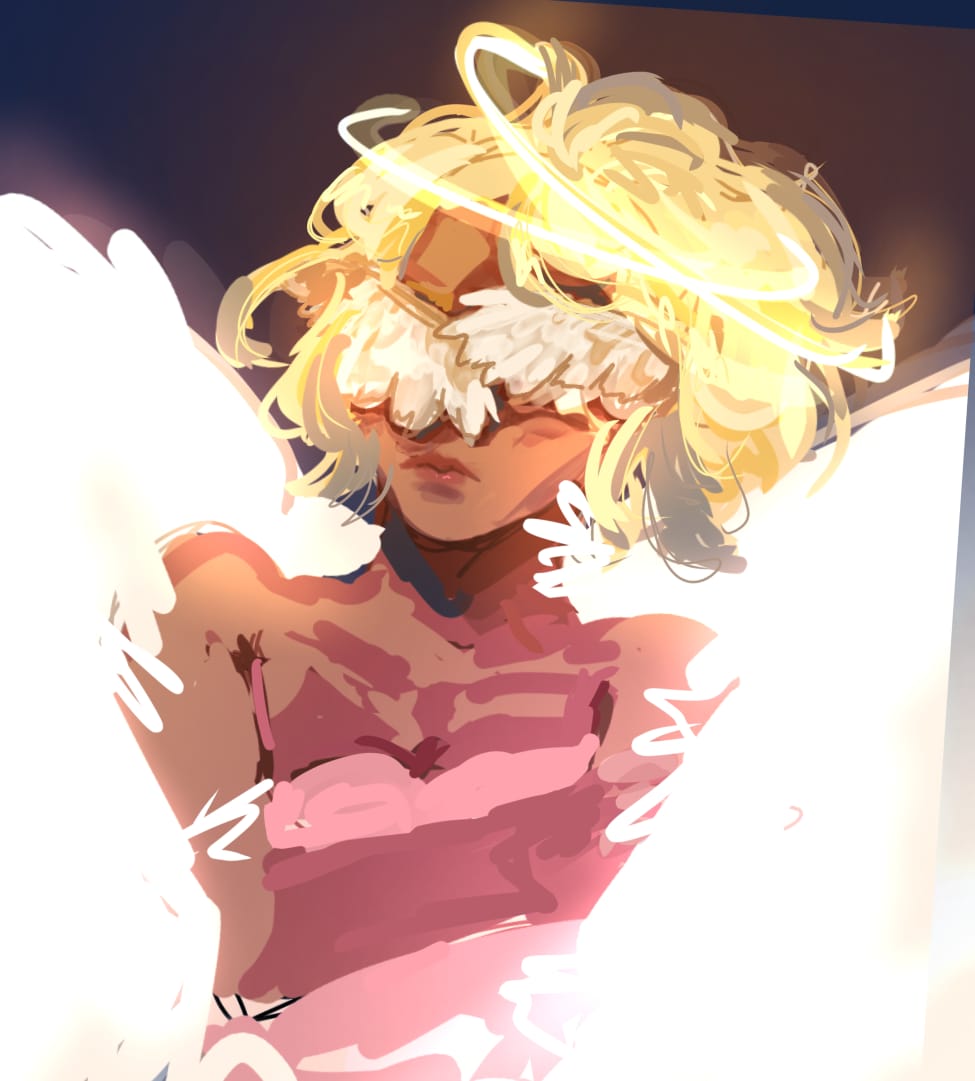
I am never going to love you. 
It is a rebellion whispered in the dark; 
an unholy desire that clings to my soul. 
An act of defiance against the heavens above. 

But when I see you with that lopsided grin, 
it transports me into a dream, a reality in which  I am not allowed to
exist. Yet my heart trembles at the thought of holding you close, for I
have been taught that love like this 
shrouds my soul in blasphemy. 

The weight of my faith binds me in chains, 
each glance, each brush of skin, 
a reminder of the cross I bear. 
The whispers of angels turn into mocking echoes 
as I pray for absolution, for a way back home. 

Why can’t you see 
how you slip through my defenses so easily? 
No matter how fervently I pray,
you linger, a sacrilegious thought in my mind. 

I live in a world where loving you is a sin I dare not confess, 
and my heart aches like a sacrificial lamb, 
caught in a storm of desire and dread, 
as I tread the fine line between heaven and damnation. 

My heart is a battleground 
where devotion wrestles with despair, 
and each pulse is a prayer laced with anguish. 

For the love I crave is a curse in disguise, 
a divine comedy played out in shadows, 
and I am but a sinner, 
lost in the depths of my yearning for you.

What’s in a Name?

By Tia

One lives their life with a name they are christened with at birth—by family, by religion, by community. 

As the years pass, that name becomes a lasting identification. An identification card for a whole set of flesh, bones, and a beating heart—a person.

This name takes various forms and shapes each time it is uttered. A culmination of letters becomes a whole world on its own. Or maybe, two clashing worlds. One world given from the outside of the person, and one from within.

They often clash, at least for this writer.

A few letters strung together, battling over what meaning to take and what meaning to make. 

The outside world is governed by the providence of religion, society, honour, and family, while the inside world exists in the chaos of continuing personhood.

Personhood. Individuality. Conscience. The Voice.

What is my name, then?

What should be my name?

Because one name does not suffice for the enormous existence of my being. My being, that is not limited by flesh and bones, not limited by biology, but transcending the expanses of time.

What should I call her?

What should I call me?

A name is not enough to bear the weight of the wars I have fought, for the love I have received, and for the love I continue to give. A string of letters is not enough to describe the magnanimity of this state.

For all the lives I have lived and rebirths I have taken, for all the fallacies I have committed and all the redemptions I am making—one name is not enough.

One meaning is not enough, nor a singular interpretation of it.

I desire my name to hold the depths of this whole universe. 

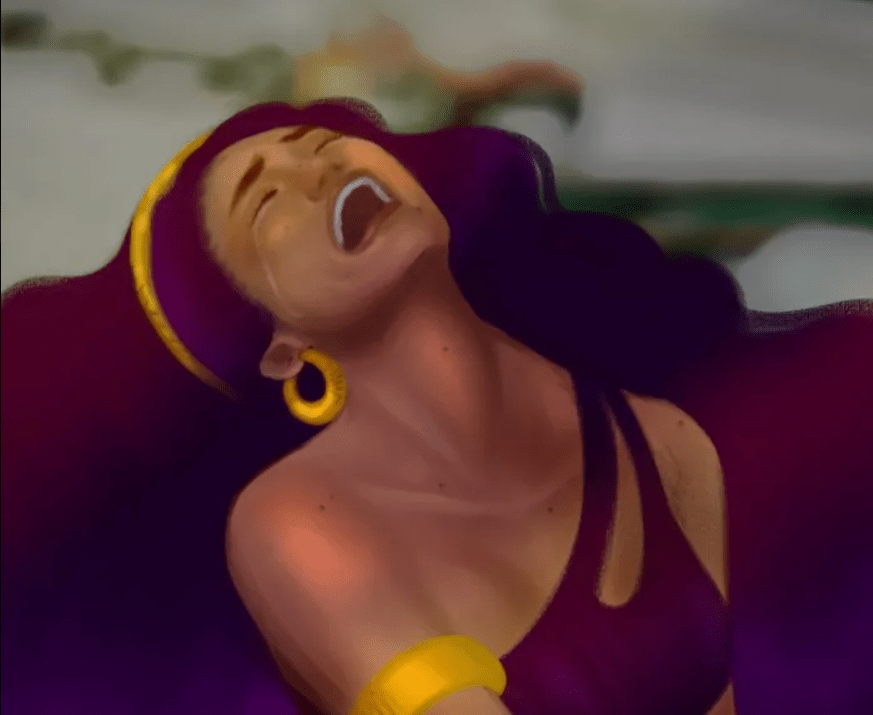
to the cat who gnawed through wire

By Zoe Younessian

as if by 
finding 
the gaps 
in rubber, 
melding 
teeth 
into curious 
spears, 
he could have accessed 
some greater beyond, 
or maybe just warmth 
(the ravenous kind) which 
coursed 
through it 
like veinblood (you remember how he 
was always 
hungry). 

what happened instead 
was this: 
the not-ungentle smell 
of hair & flesh frying, 
wafting 
two floors up where 
i learned 
what it means for light 
to unclasp 

from an eye, which pooled
in the socket 
like a palmful 
of 
semi-solid 
amber 
coins. 

how easy 
it was 
for the soul 
to depart, 
as if 
all 
we’ve ever done is 
toe some 
invisible line, 
as if 
letting go 
was as seamless 
as stepping 
away, 
just 
like 
that.

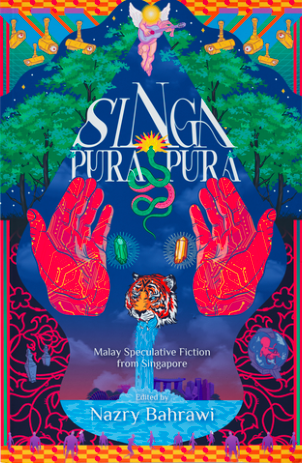
A Review of Singa Pura Pura

By Holly Wilcox Routledge

In a literary landscape dominated by anglophone speculative fiction, both at home and abroad, Nazry Bahrawi’s Singa-Pura-Pura brings Malay speculative fiction into the spotlight with a collection of thirteen short stories, each bringing a uniquely Malay angle. Faisal Tehrani gives a short but effective introduction to Singapore’s literary scene to lay the ground for the first short story, ‘Beginning’ by nor, which is a retelling of the Islamic creation story, whilst Bahrawi further pushes the idea on what can be considered spec-fic, and where Malay authors and their work fit within the genre, in an afterward essay, ‘Malay Speculating Futures’.

The anthology organises the thirteen short stories into four separate sections, each accommodating the usual themes present within speculative fiction: science fiction and technology; urban fantasy and horror; fantastical realism that leans heavily on the fantastic; and a section dedicated towards the examination of the familial unit, or any kind of unit, that sees how it splinters or strengthens under the weight of possibilities. 

In ‘Prayers From a Guitar’, Nuraliah Norasid examines patriarchal expectations and entitlement when an ustaz contemplating taking a second wife encounters an angel playing a guitar. ‘Transgression’ by Diana Rahim takes on a modern-day retelling of a dance ritual from the east coast of Malaysia called Ulek Mayang. In the more sci-fi leaning section, ‘Doa.com’ presents an interaction between two men at a cemetery in a world where robots and AI have been implemented in everyday life, whilst ‘Quota’ focuses on a woman trying to find personal happiness in a society where humans have become able to accumulate and spend it. As for the more speculative section, in ‘Mother Techno’, a woman navigates caring for her relative and utilizing an intelligence system designed to improve human birth rates; in ‘Second Shadow’ a political writer realises he has grown a second shadow; and in ‘Tujuh’, written by Bahrawi himself, the narrative follows a series of murders over the course of Ramadan. 

But it’s after the short stories end and Bahrawi returns that this compilation brings out the ultimate question. Where the short stories show what Malay spec-fic may look like, Bahrawi in the essay ‘Malay Speculating Futures’ attempts to tell us not only what it is, but what it could be as more and more attention is drawn to narratives and authors outside of the Anglosphere, not just in Singapore, but beyond. It’s a challenge that he bravely steps up to try to answer head-on, although constricted by length and time; after all, the question of what makes speculative fiction unique to any culture or nation is one that can and has produced entire texts devoted to tracing the development of national storytelling and arts. 

What is speculative fiction? Bahrawi turns to Margaret Atwood, whose definition refers to works that assume ‘things could really happen, but hadn’t completely happened when the authors wrote the books’, noting that her definition results in spec-fic being a genre outside of science fiction, referring to sci-fi as ‘a genre that imagines “possible futures” rooted in the view that our current material reality could lead to such wild possibilities’. But he also turns to the poet Ng Yi-Sheng, who put forth in The Straits Times ‘that local [Singaporean] speculative fiction can be traced to the 1950 ghost stories of Othman Wok, and the Malay magazine Mastika. The latter observation, Bahrawi points out, means that Malays have been ahead of the curve, including before Atwood herself, since ghost stories have been an integral part of Malay culture, with some of the most well-known Malay-language films being those centered on the Pontianak. 

Bahrawi’s interrogation of the sci-fi-infused spec-fic stories also prompts a deeper look into the role of technology within everyday society, whilst still holding onto the questioning framework of spec-fic. After all, if spec-fic is about things that could really happen, but haven’t already, what does it mean to write about the personalisation of AI in a time and age where AI has not only become so commonplace it is used in day-to-day situations like drafting letters, but has also prompted a massive cultural backlash? Can we truly write spec-fic about an AI that grows to become what we consider human, what with so many articles published now desperate to make us understand that AI as we know it is merely a glorified calculator regurgitating information whenever prompted, rather than the all-seeing individual that sci-fi writers, and perhaps many of us, have tried to make it out to be? And if we can consider that spec-fic, what does a distinct Malay flavour look like? 

Perhaps there will never be a clear-cut answer to these questions. After all, Bahrawi poses them to question our understanding of genre, culture, language and how these interact with each other, encouraging others to interact further with the spec-fic genre. However, there is an avenue that Bahrawi, and the anthology as a whole, shines in, and it’s in its open-minded, frank presentation of Malay culture and language that pushes non-Malay audience members to engage themselves with the stories on a more personal level. Bahrawi later writes, ‘This anthology must also challenge the perception that Malay literary writing is perpetually lamenting lost places and tradition in the forms of displacement and nostalgia, though these themes are certainly present in some of the stories here.’ This statement is probably the single sign that the anthology has succeeded; Malay terms are written unitalicised and un-othered, written into conversation without any over-explanation to make a non-Malay audience feel comfortable. After the essay, in fact, is a whole glossary for each story, meaning readers can flip the pages themselves to uncover any explanation they require, instead of waiting for the writers to explain it to them.

Hanami

By Hailey Jiang

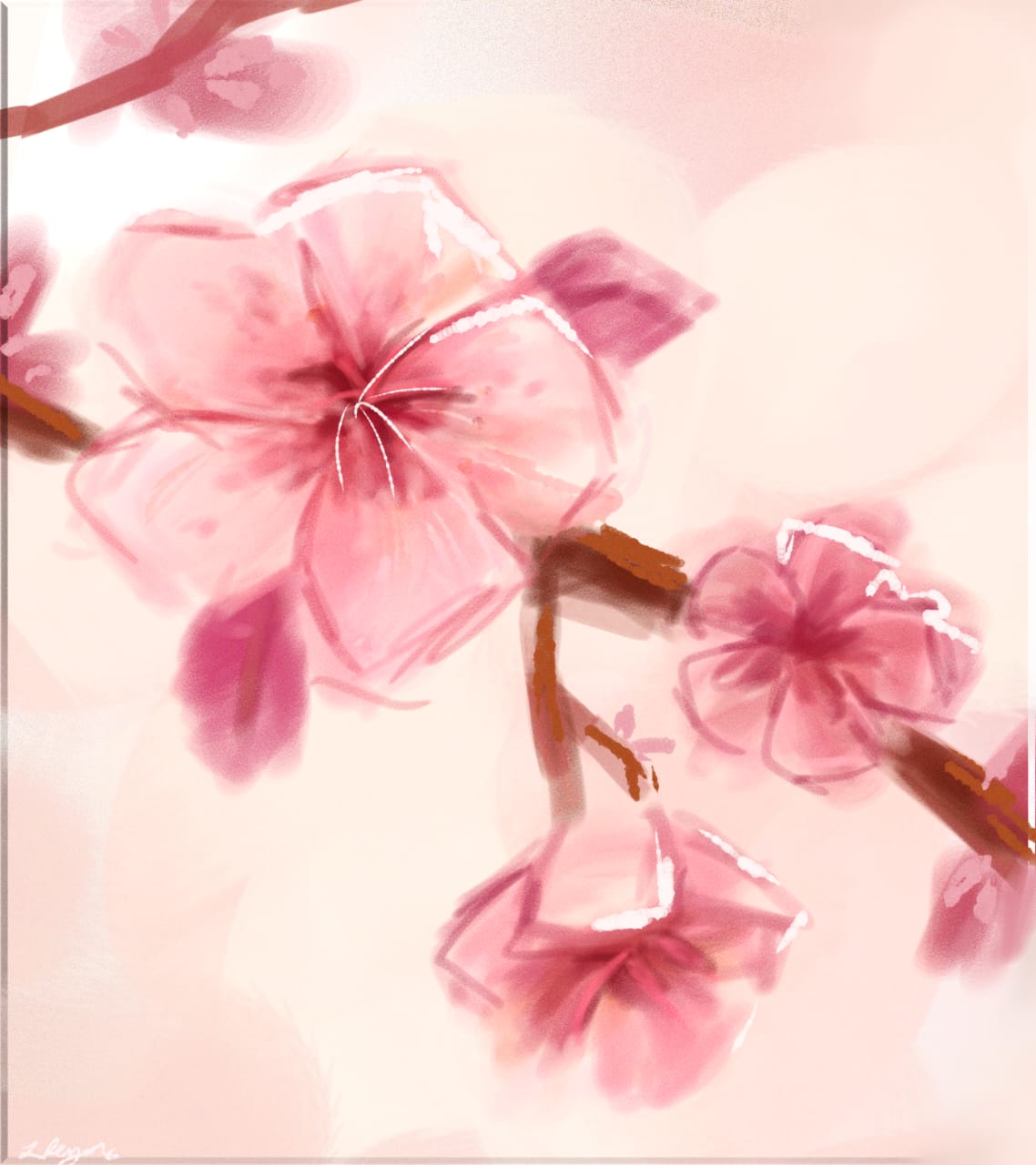
When I bloom it is nothing short of a miracle.
You admire my blooming branches Picnic
under the graceful flowers 
Capture the fleeting moment. 

Yet, it is no coincidence 
That I am your “weeping cherry”. 
You never cared for who I am, 
Only for what I can be, 
For you’d rather 
Dumplings than flowers. 

Who am I if not 
Beauty and life 
Death and impermanence 
our pride, your obsession, 
Your weeping cherry 
The one you love dearest 
The one you fear the most, 

For my death comes quick. 

You awe over my life 
And neglect to mention my death, 
You admire my beauty 
Only from afar, 
You raise me up 
Just to let me come crashing down.
I am everything to you 
Until I rot, until I am nothing 
But a curse on your children.

I am beautiful to you
For only a week
Before I am an omen
Of a life not lived.

Thoughts Whilst It Slips Away 

By Rachael Daly

There are eight billion grains of sand just in this square meter under my feet. 

In youth I’d come down to this beach and stand rigid in the quiet lapping of the sea along the shoreline. Only ever up to my ankles, I’d look down at the hundreds of thousands of grains of sand filtering through my toes and imagine I could feel the Earth’s rotation beneath me, the world spinning at dazzling, unfathomable speeds as if attempting to fling me off into the vastness of space beyond. An ant on a disco ball. It felt like the oozy woozy anemic headspins from standing up too fast, white stars twinkling and coalescing in my vision, reality a blur behind. When I was young, fresh to the world, I wanted to jump and pirouette with the spinning planet, building and building that momentum and then butterfly stroke into the stars. 

Eight billion. 

Now I cling on to this ground below, toes gripping tight. I’ve somehow super-glued myself to the ocean floor, my feet buried in the sand and my brain willing my head not to follow. Soles tacky, the tiny gaps between my toes full, I’m picking gloopy glue off my fingers. Grains cluster under nails. The world spins fast.There are more stars in our observable universe than grains of sand on the whole Earth — or so they say.

The Inevitable

Written by Kasturika De

Last night, I held him tight.
The images abandoned their count,
And the psalms I read 
Had no rhythm instilled.

Contours of darkness
Pressed my eyes shut.
I found it coming close,
Closer, and closer still.

No way to cheat 
The cold — a parasite.
The tunes of evening 
Fading… fainting.

My heart beats on.
The rhythm—calm,
Hoping the melody 
Won’t lose its soul and pause.

To take a pause 
I frankly never thought.
Not even now, until—
“Kamala.”
The cry rang sharp.

The eyes made me realise 
It was for me.
The call, the name—
All of it was mine.

Burst into tears 
On my chest,
Holding me tight;
Someone had just entered.

It was Mr. D:
Statistical, merciless, impatient,
Unavoidably handsome,
Ignorant of the door behind; not my soul.

“Your last rites are close.
No wishes to make?
Let’s leave, then.”
Now I was done, I knew.

‘Cause his eyes made it clear;
Not at all.
But wait—how did I know,
When the rhythm paused?

How did I see 
The tears, lying to me?
The noises roared 
And I heard, standing blank.


Motionless.

My consciousness killing me.
Gossips and rumoured tales 
Strangling, waiting for my move.

Now, he comes closer,
Holds me by the wrist,
Pulls me to a million light years 
Away, and far away…

Evermore by Taylor Swift: An album review

By Gabrielle Wilkinson

‘Wait for the signal and I’ll meet you after dark,’ from the Billboard 100 track ‘Willow’ resonates to fans as Taylor Swift announcing her surprise album Evermore mere hours before its release.

The alternative folk album with snippets of pop and country pays homage to her genre-shifting discography, whilst she ‘travels further’ into the ‘forest of the folklorian woods’ (as described on Instagram).

 With Folklore being released 5 months earlier than its sister album Evermore, there was instant pressure to compete with its storytelling genius; and Taylor did not disappoint. Recording at Long Pond studio in Hudson Valley, Taylor brought back her Folklore collaborator Aaron Dessner to create the 14-track album, reaching Number One in 10 countries.

‘No Body, No Crime’ is the instant standout as a country murder ballad. Drawing similarities with popular country breakup songs like ‘Before He Cheats,’ Taylor takes it one step further into a sinister rabbit hole of revenge. Taking the listener through an imaginative and dark interpretation of a murder, Taylor acts as the avenger for the killing of her friend Este. Sirens at the start put the listener in the aftermath of the death before the feature of American rock band HAIM adds a menacing undertone, dictating the piece with ‘He did it’, before the instrumental plays. 

Facing privacy invasions for her entire music career, the album acts as a breath of fresh air to albums such as Reputation where speculation among the press ran wild. This included the synonymous Kardashian feud that saw her ‘cancelled’ after the editing of a leaked phone call between Kanye and Taylor. Instead, Evermore is quiet with any real-life experiences hidden between poetic lines that reference classics like The Great Gatsby and characters like Dorothea, who left her hometown to chase a better life. Using the album as an act of escapism, Taylor silences the ‘she only writes about her boyfriends’ brigade.

‘Tolerate It’ is the crowd pleaser, and it is not hard to see why. Telling the story of a woman who is not treated right by her husband, Taylor capitalises on a harsh reality that many women can relate to. When removed from the Eras tour set list to make room for her new masterpiece ‘The Tortured Poets Department’, there was (and rightly so) outrage given it is one of the most dramatically vulnerable pieces. Taylor can be seen ‘laying the table with the fancy shit’ before a man enters the room and ‘tolerates it,’ ending the scene with walking away in defeat to the reality of unrequited love. 

We can all relate to a longing for escaping in the heights of lockdown and this album perfectly captures that feeling. No song encapsulates the heartache of lockdown like ‘Marjorie’, which delicately demonstrates the regret and heavy grief after the death of a loved one that we did not do or say enough. Taylor flows between the racing thoughts that occur with lines written with simplicity: ‘should have kept every grocery store receipt’ before looking forward to the future with more hard-hitting ‘I should have asked you how to be.’  Demonstrating the terrifying uncertainty of a life without their guidance, the clever snippets of backing vocals from her grandma’s opera singing tapes provides comfort to her fans that lost loved ones are never too far away. 

Vices

By Vanshika Srivastava

All summer long, what I dreaded was
to be held and fend for.
‘Cause once the body finds
comfort in the shiver of life,
dare she fall she would realise,
it was an eternal winding pathway
to her to her demise .
Disguised as the elixir, she dreamt of as a child.

‘Oh no!’ they say— 
beauty lies in the eyes of the beholder.
But cleverness and wit were famished,
for the world then and there decided
that they were just the devil’s creed.
Something never having the choice
to even just wish to be free.

Never again, I swore,
would I crunch the leaves in their fear,
shatter glasses or bid the kind slumber away.
I would unclench my hand, and parade
with all the faith I can muster
to break free, to breakthrough,
to stop the poison of the solace I feign from
my trials and my vices.

Is Disney’s colour-blind casting progressive or exploitative?

Research Paper by Fadun Adenuga

The real issue with Disney’s colour-blind casting, the perpetuation of hate against non-white women in media, and the consequence of ‘forced’ representation. 

With the release and lackluster reception of Disney’s Snow White (2025), directed by Marc Webb, the public has been left wondering: who is to blame for this box office failure? Some critics have highlighted the “blandly artificial” sets (Katie Walsh, The Spokesman), “super-creepy” CGI dwarves (Nadira Goffe, Slate), and even Gal Gadot’s unimpressive performance. That being said, the movie’s lead actress, Rachel Zegler, has arguably received the most aggressive and negative reaction from internet users, starting from the very announcement of her casting.

Zegler’s role as Snow White is just the latest in Disney’s increasing line of race-swapped characters, following the likes of Halle Bailey as Ariel in The Little Mermaid (2023) and Yara Shahidi as Tinkerbell in Peter Pan & Wendy (2023). This calls into question the intentions of Disney executives, especially with the consistent vitriol directed at these actresses whenever these “creative decisions” are announced. 

Backstage.com describes colour-blind casting as a practice that “involves casting directors putting together ensembles without taking an actor’s race or ethnicity into account”. On paper, this sounds like a wonderful idea. It feeds into the general belief in a meritocratic society that rewards those with the skills, regardless of race. However, this works better as a concept than as a practical solution to decades of racism and white supremacy in the film and TV industries. Micha Frazer-Carroll, writing for The Guardian, points out some shortcomings of colour-blind casting. These included criticisms that the practice often “compromises historical accuracy” and may “remove key messages from stories”.

Despite both Bailey and Zegler being put in the same uncomfortable position of playing originally white roles, the public’s reaction to the former differed greatly from that of the latter. While Bailey did receive a significant amount of racially charged criticism, including the trending hashtag #NotMyAriel, she was also showered praise for her performance in the movie and her gracious attitude towards the role. Descriptors such as “humble” and “classy” were used for her response to the racism she experienced. As a result, she was widely supported by audiences and professionals alike, including Rob Marshall, the film’s director, and Jodi Benson, the original voice of Ariel in the 1989 film. 

This greatly differs from Zegler’s experience which was far more catastrophic, especially following interviews, which led to her being labeled “ungrateful” and a “brat” despite her clear appreciation for the role. The night and day reactions to these two actresses reflect the common phenomenon where women, particularly women of colour, are tone policed, criticised for their tone or manner, and expected to behave cordially and respectfully even in the face of demeaning and distressing situations. Disney’s intentions seem especially nefarious due to the lack of support Zegler received during this harrowing period of being subject to intense online hate speech and bigotry.

Hate speech has become synonymous with existing online, with a third of internet users experiencing it (U.S. Government Accountability Office) and platforms such as X (formerly Twitter) becoming cesspools that breed bigotry. Ed Saperia says this is because “controversial” and “extreme content drives engagement” (The Guardian). This, alongside the “pervasive” “proliferation of false content” (Jesus Serrano, World Economic Forum), has made the internet a very dangerous place to be, especially for women of colour. In March, Emmy-award-winning actress Ayo Edeberi claimed via Instagram stories that she had received “insane death threats and racial slurs”. This followed false reports of her starring in a Pirates of The Caribbean remake she had “never even heard of”, which Elon Musk shared with the caption: “Disney Sucks.”

There are many links between experiencing racism and a range of physical and mental health issues, such as depression and anxiety (Medical News Today). This is why the mental wellbeing of actors and actresses doing their jobs should be prioritized, from the moment casting decisions are made. With this in mind, Disney’s insistence to put women of colour in the crossfires of racist critique is disquieting, especially given the state of their live-action remakes. The company’s disinterest in creating new stories is clear, with a whopping ten out of the twelve releases for 2025 being sequels or remakes. Disney’s live-action adaptations of classics, from The Lion King to Lilo & Stitch, have been criticised for lacking originality and being “nostalgia bait.” Knowing this, it is clear that Disney is uninterested in innovation in its storytelling. So why does the company continue to cast non-white actresses in white legacy roles? 

Colour-conscious casting is considered a more progressive and holistic alternative to colour-blind casting, as it “actively acknowledges and considers race” instead of “attempting to ignore it” (Micha Frazer-Carrol, The Guardian). This approach justifies its “non-traditional” casting choices by making them a part of the story. The final product then feels more authentic, rather than a by-product of some executives’ aim to check off every diversity box. It becomes apparent that The Walt Disney Company’s decision to race swap characters is not grounded in authentic representation, but rather an attempt to appear more progressive and inclusive, at the expense of the well-being of the women they cast. 

Bibliography:
https://www.spokesman.com/stories/2025/mar/19/film-review-snow-white-will-resonate-with-kids -not/

https://slate.com/culture/2025/03/snow-white-2025-movie-disney-box-office-reviews-rachel-zegl er-gal-gadot-controversy.html

https://www.backstage.com/magazine/article/color-blind-casting-76238/

https://www.theguardian.com/tv-and-radio/2020/aug/11/its-dangerous-not-to-see-race-is-colour-blind-casting-all-its-cracked-up-to-be

https://www.gao.gov/blog/online-extremism-growing-problem-whats-being-done-about-it

https://www.theguardian.com/technology/article/2024/sep/05/racism-misogyny-lies-how-did-x-become-so-full-of-hatred-and-is-it-ethical-to-keep-using-it

https://www.medicalnewstoday.com/articles/effects-of-racism#adults