
Research Paper by Gabrielle Wilkinson
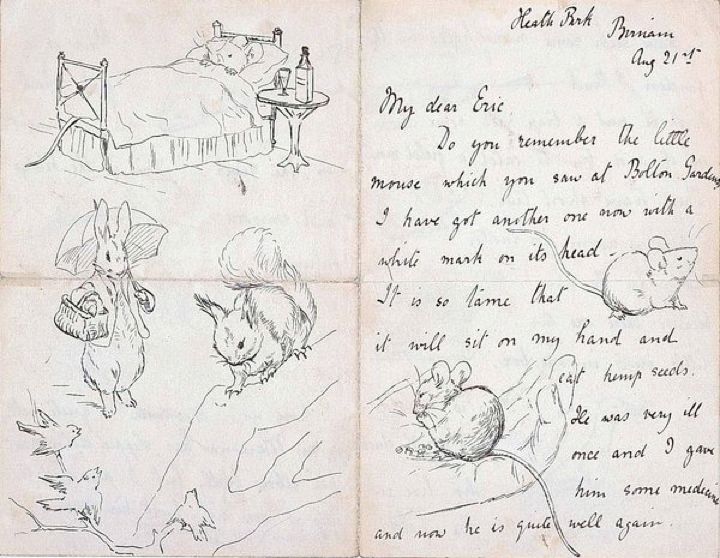
Beatrix Potter was an adored author and conservationist, best known for her children’s books centered around animals, most famously Peter Rabbit. Leaving her home to the National Trust, Potter wished for a legacy of preservation, specifically of our beautiful countryside and all the small creatures that call it home.
As we face a wildlife crisis, we can use the legacy of Beatrix Potter and the enchanting world she created to protect the characters she loved.
Mrs Tiggy Winkle

As a self-proclaimed Mrs Tiggy Winkle enthusiast, she earns her place at the top of the list. The inspiration for Mrs Tiggy Winkle came from Beatrix Potter’s own hedgehog, also named Mrs Tiggy Winkle! Her kind nature and cute black nose has weaved her into the hearts of millions.
Hedgehogs are now listed as ‘near threatened’ on the International Union for Conservation of Nature’s Red List. Their decline is due to factors such as urban development, pesticides and traffic.
How to help our prickly friends:
- An important one; be careful on the road at night! As hedgehogs are nocturnal creatures, they are typically out and about at night. If you see a prickly ball on the ground, it may be a hedgehog in their defensive state.
- Make a hedgehog home! A fun activity to do with the family that will give our prickly friends a place to rest their head!
- Leave a leaf pile: An excuse to not keep the garden tidy! A leaf pile provides the perfect environment for worms and other insects, a delicious snack for hedgehogs.
Jemima Puddle Duck
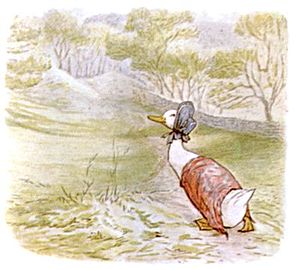
Jemima Puddle Duck is beloved across the Beatrix Potter universe. Her gentle nature and grit has made her one of the most well known ducks in literature, fighting off competition from Donald Duck and the Ugly Duckling.
The Bread Phenomenon
Many of us will have childhood memories of going to the local park to feed the ducks leftover bread. However, recently you may have seen signs discouraging you from this, and for a good reason.
Bread offers little to no nutrition for ducks. In fact, it creates water pollution from the bacteria inside. It can also cause malnourishment by tricking ducks into thinking they are full when they are not!
The Canal and River Trust has put together a list of what to feed ducks instead next time you are at the park:
- Sweetcorn: Ducks actually love this sweet snack!
- As a nation, we are guilty of throwing away vast amounts of lettuce so next time you go to the bin with leftover lettuce, why not rip it into pieces and take it to your local park on your next walk!
- Seeds: a nutritious snack for our webbed friends!
- REMEMBER: Ducks cannot chew food, so make sure it is in tiny portions so ducks can enjoy these snacks without an issue! 1
Peter Rabbit

I can’t write a piece about Beatrix Potter characters and not talk about little Peter Rabbit. The mischievous little bunny loves to cause trouble in Mr McGregor’s garden – in fact, the 6 books featuring him have sold over 150 million copies! 2
Urban development has introduced rabbits to new predators including cats and dogs. Data from the Smithsonian Migratory Bird Centre suggests that domestic cats alone are responsible for the death of around 2.4 billion birds and 12.3 billion mammals annually, many of which are wild rabbits. Whilst wild rabbits can be mischievous like Peter Rabbit and steal a carrot or two, they are vital in maintaining healthy ecosystems and are crucial in the food web, influencing plant life by fertilising soil. Their little burrows provide shelter for smaller creatures like mice and ground birds, earning them a hero status, just like Peter Rabbit!
Here are some tips on how to help our long eared pals from the Environmental Literacy Council:
- Create a pile of branches and twigs: this gives refuge from predators like hawks.
- Avoid clearing vegetation during nesting seasons in spring and summer.
- Curb your curiosity during nesting season and do not pry with nests! 3
Squirrel Nutkin
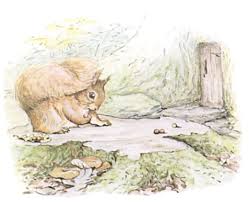
Another naughty character is Squirrel Nutkin, known for his unmannerly and rude nature with his impudence to Old Brown Owl getting him into serious trouble..
Red Squirrels are classed as Near Threatened in England, Wales and Northern Ireland. The main reason for their decline was the introduction of grey squirrels from America. Grey squirrels carry a disease known as Parapoxvirus that kills red squirrels.They also leave little to no food for their red counterpart, typically eating grey acorns before they ripen. We can do our bit by feeding these charming red critters; here are some things to remember about feeding our red bushy tailed friends:
- – The best foods for red squirrels include sunflower seeds, apples, carrots and walnuts.
- – Do not attract them to your garden if you are next to a busy road as this puts them in danger.
- – Before feeding, make sure there are no grey squirrels in the vicinity as red squirrels can be exposed to Squirrel Pox.
- What do ducks eat? | Six healthy options. (n.d.).
↩︎ - Beatrix Potter, Public domain, via Wikimedia Commons
↩︎ - Team, E. (2025, February 26). How can we protect wild rabbits? The Environmental Literacy Council. https://enviroliteracy.org/how-can-we-protect-wild-rabbits
↩︎
Discover more from SeaGlass Literary
Subscribe to get the latest posts sent to your email.
